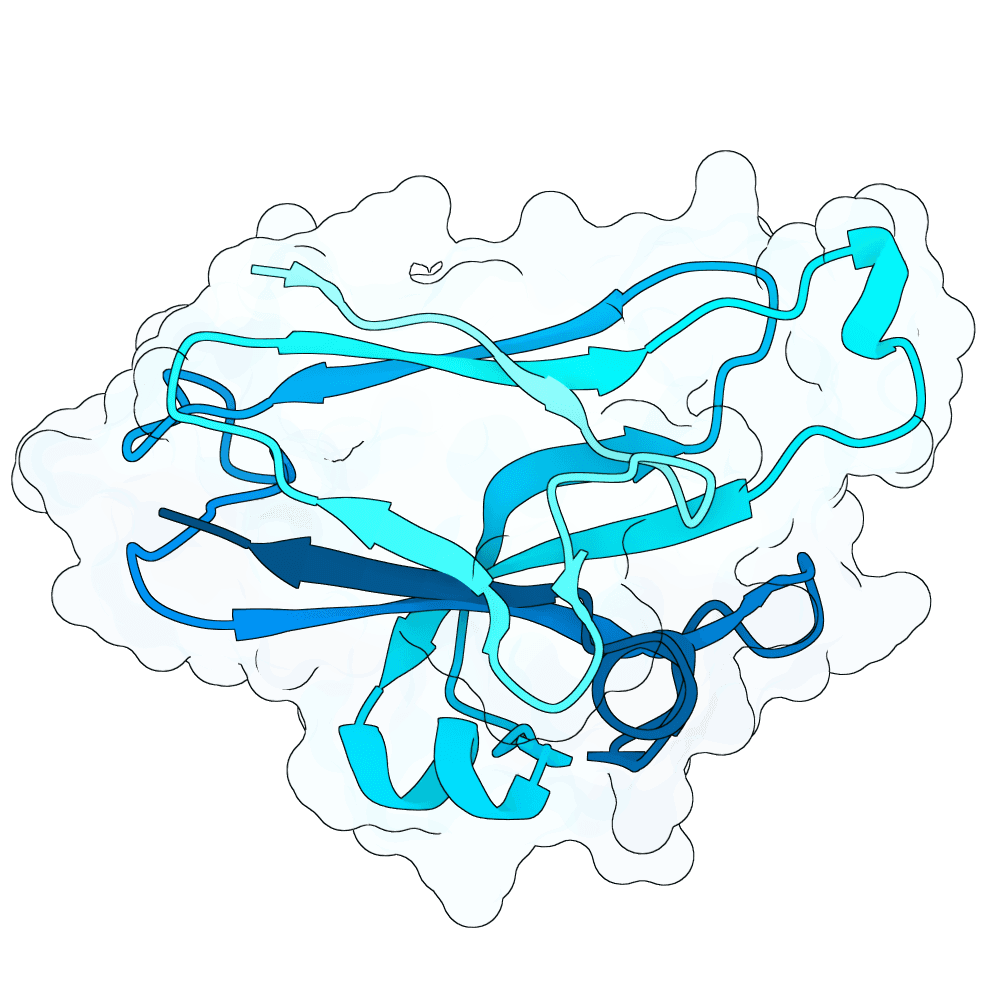
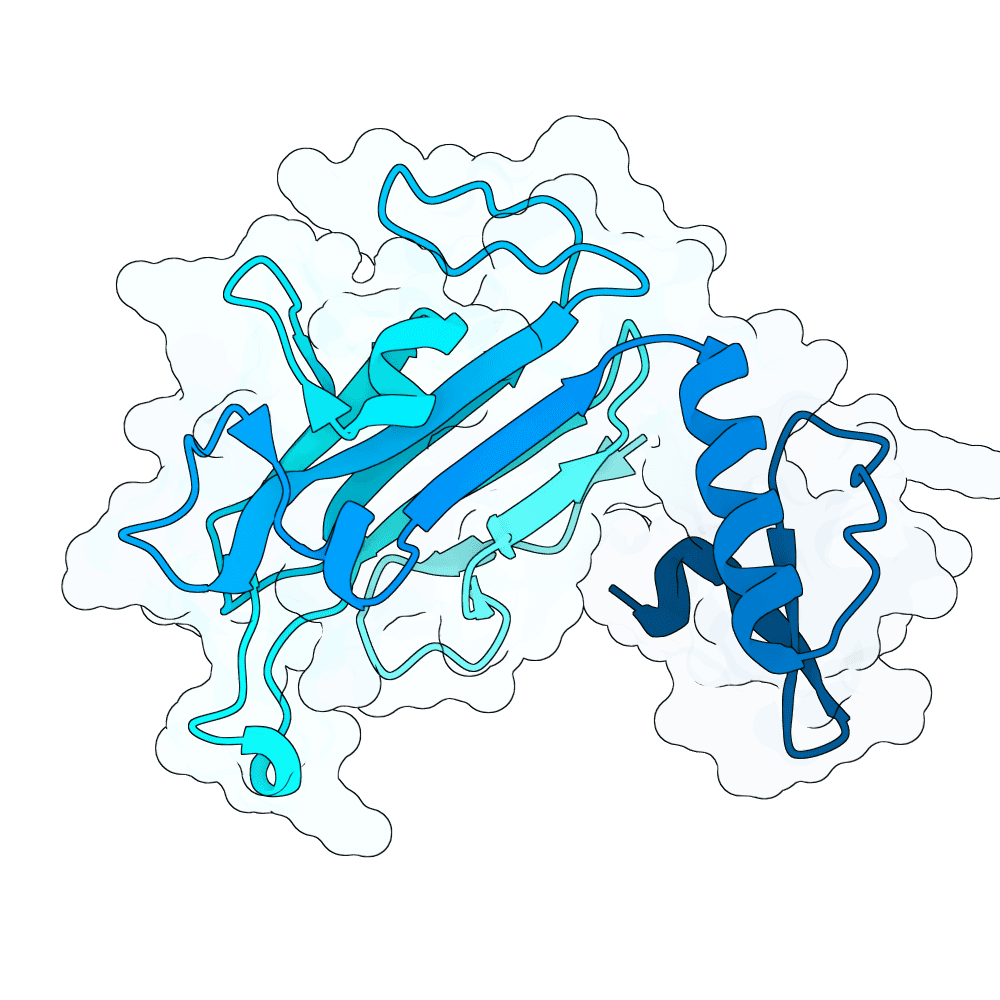
The SGH-AE protocol is a convergent protein engineering pipeline that integrates rational functional hotspot annotation with deep learning-based sequence restoration and geometric topology engineering. The pipeline consists of three key stages:
Rational Scaffold Engineering:The soluble receptor-binding domain (RBD) of human Ephrin-B2 (PDB: 2VSM) served as the template. Key functional mutations were introduced: L124A to enhance affinity, and D62Q/Q130L/V167L to abolish native signaling while maintaining viral receptor binding.
N-terminal Stabilization via ProteinMPNN:The flexible N-terminal segment (residues 31-44) was redesigned using ProteinMPNN. The model was constrained to fixed positions of the critical functional residues and the RBD core backbone, generating sequences predicted to stabilize this region without compromising the engineered interface.
Trivalent Assembly (Applied to B2_MPNN_Foldon):To achieve avidity, the engineered monomer was fused to a C-terminal T4 fibritin Foldon domain via a rigid, alpha-helical linker (EAAAKEAAAKEAAAK). This enforces the formation of a stable homotrimer, positioning three RBDs to simultaneously engage the trimeric viral glycoprotein.