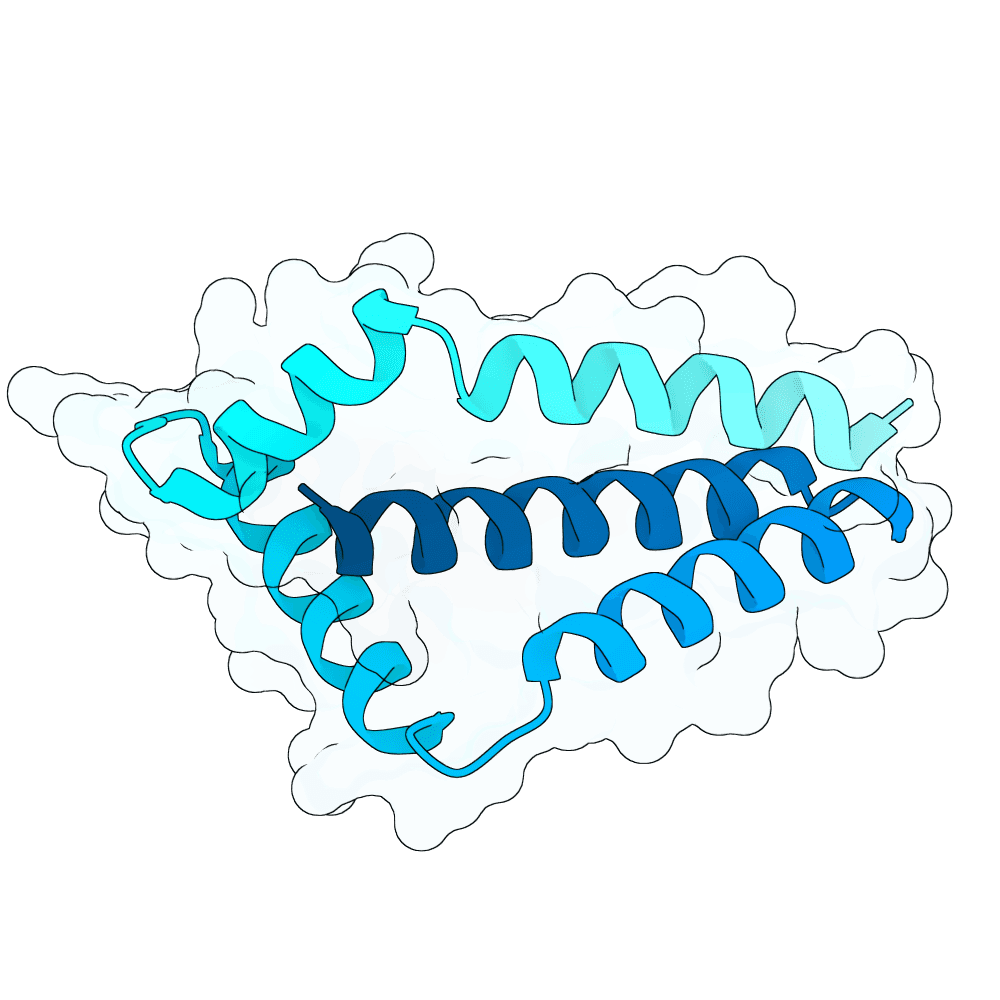
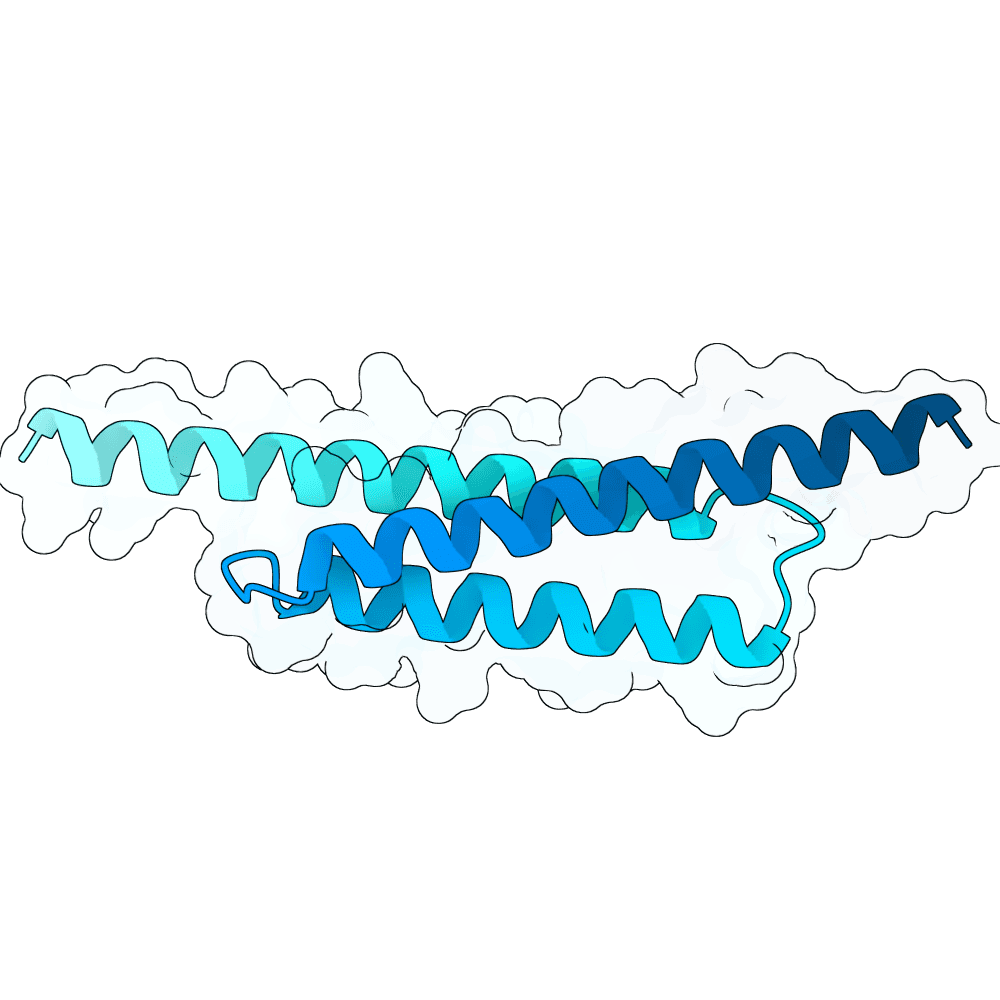
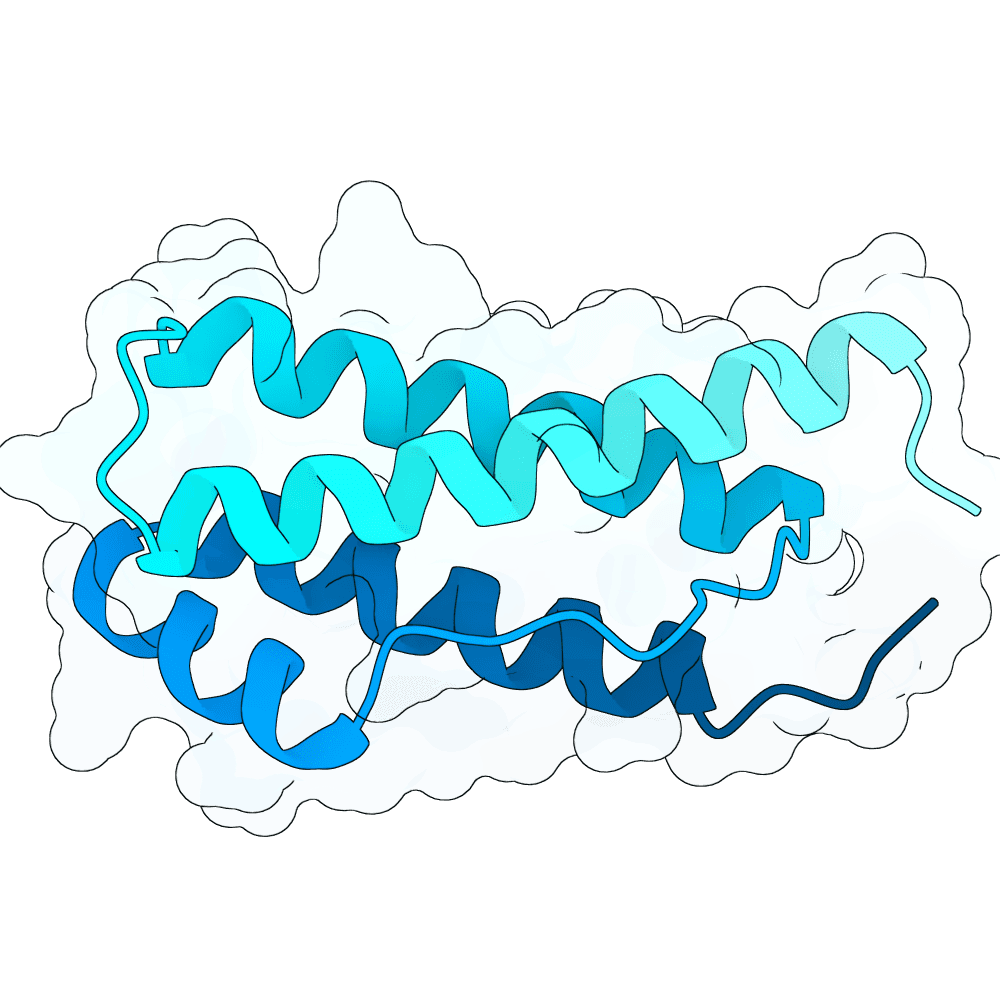
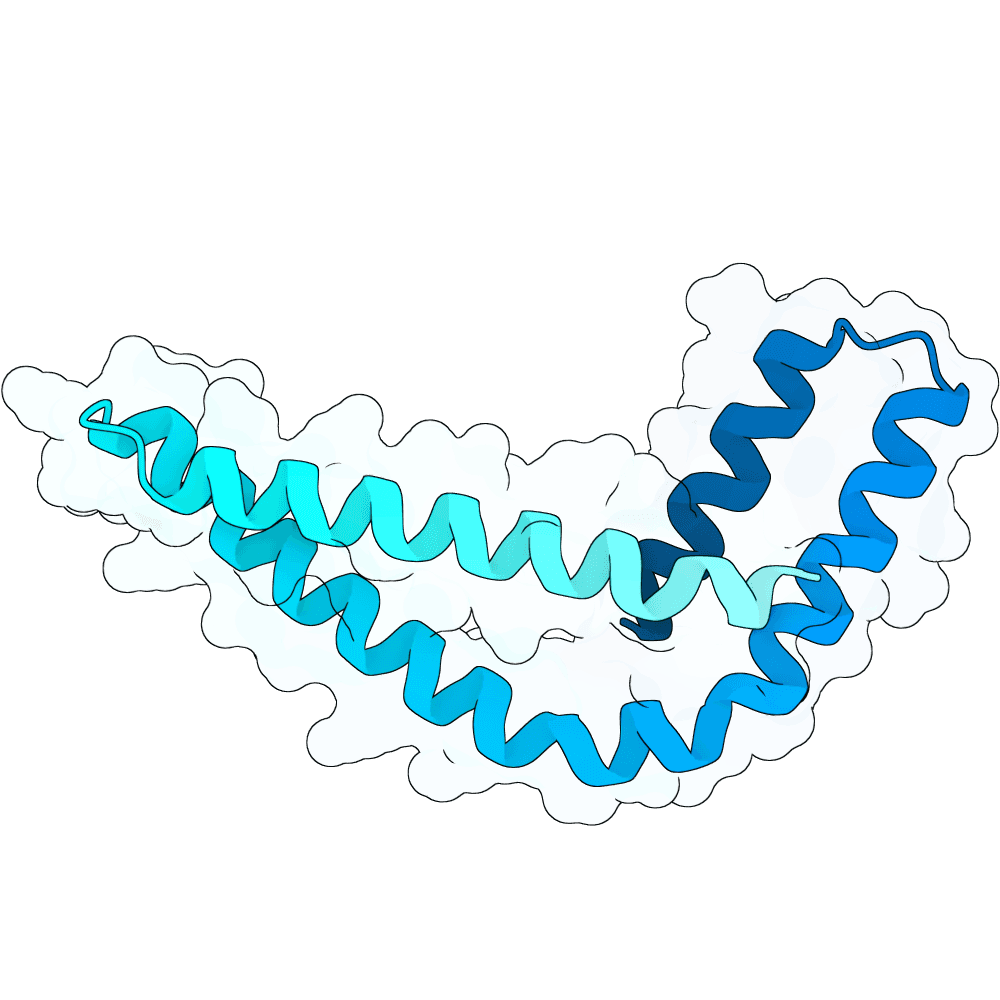
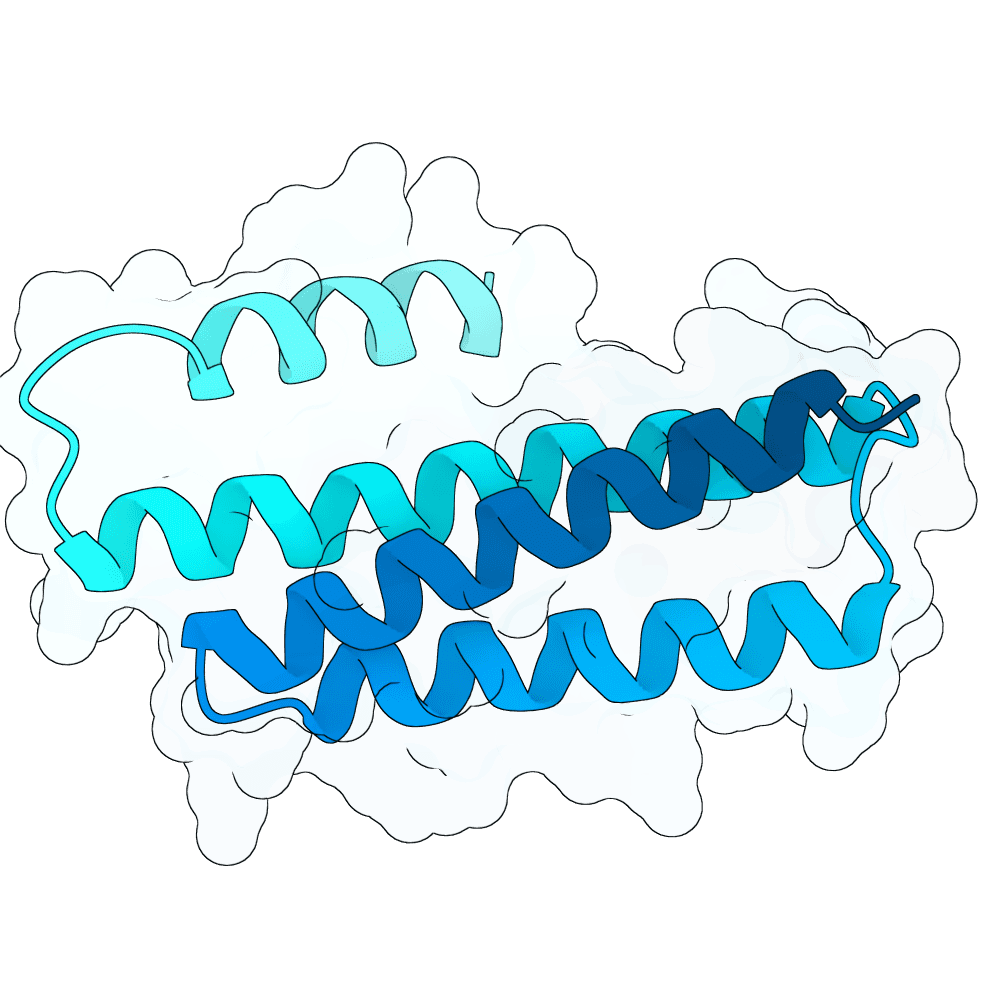
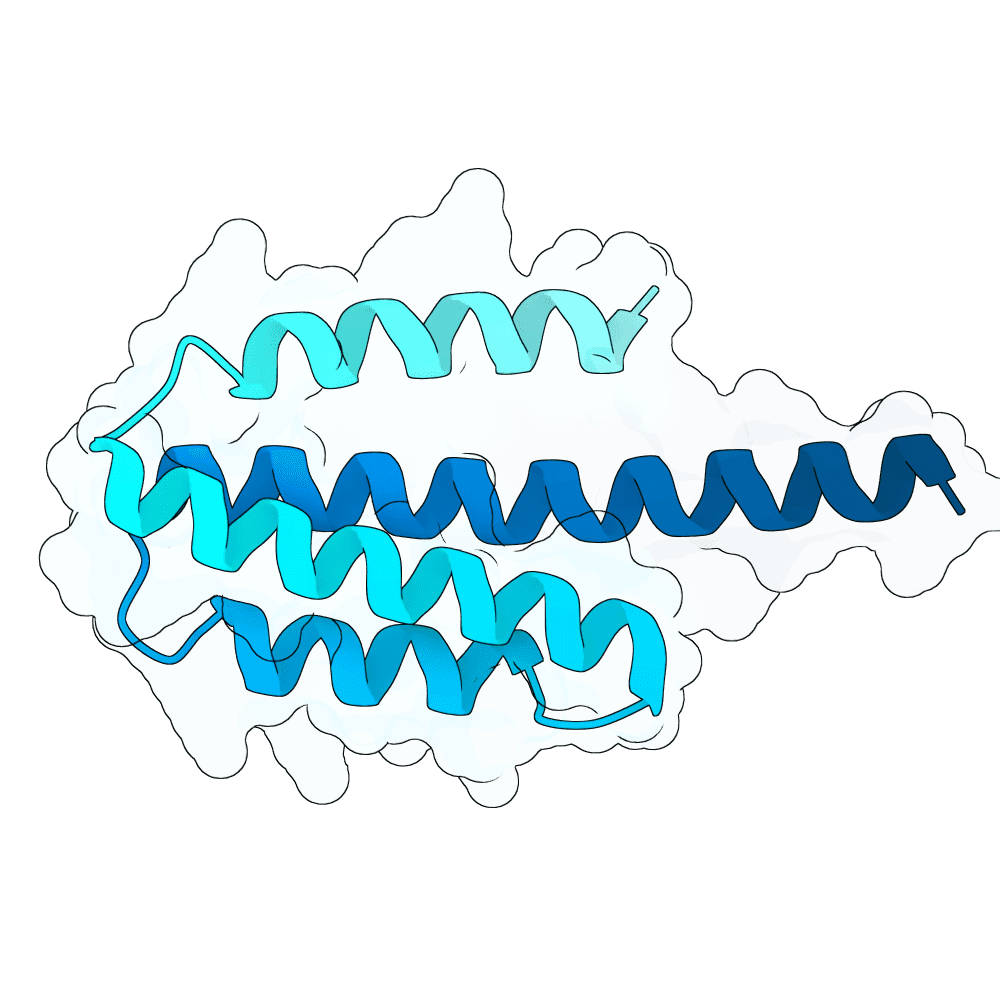
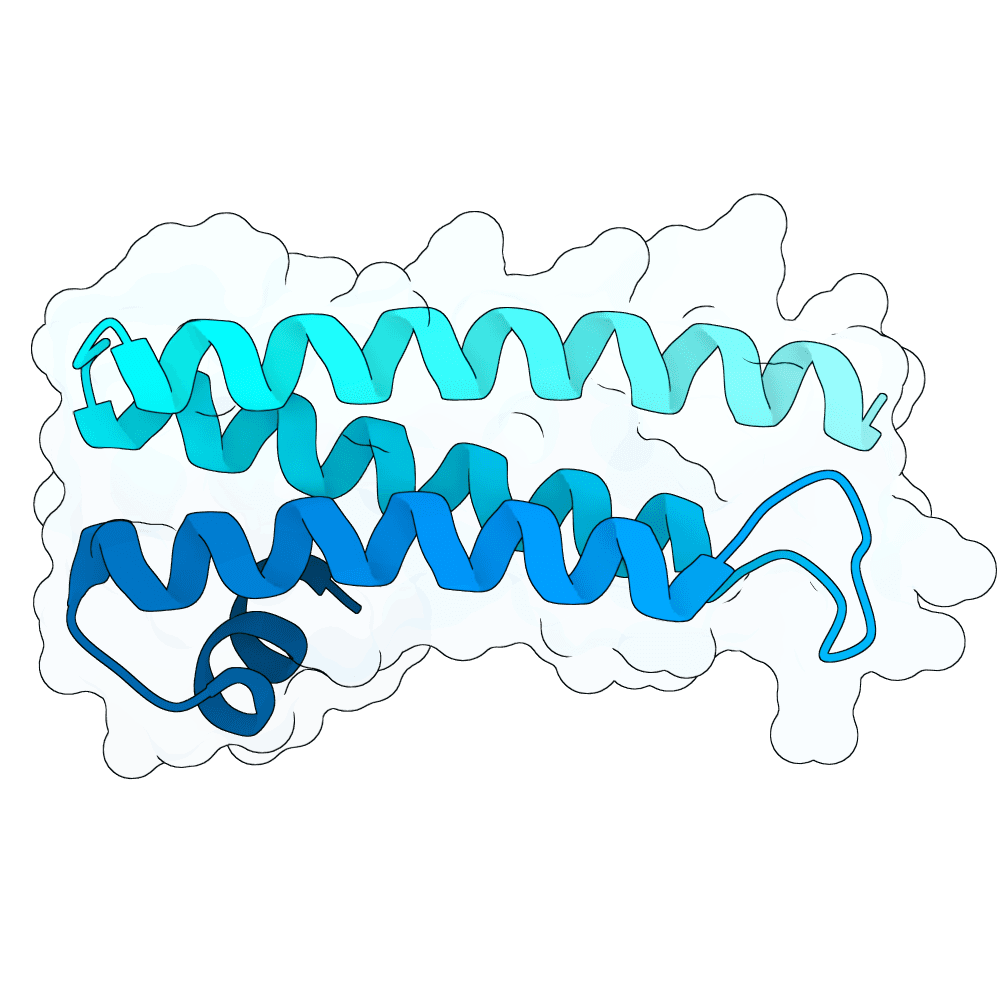
trategy 1: Differentiable Binder Hallucination with Spatially-Biased Interface Optimization We optimize sequence probability distributions (PSSMs) via backpropagation through Protenix, a structure prediction model. Starting from a uniform distribution over 19 amino acids (excluding cysteine), we minimize a composite loss combining ipTM, pLDDT, PAE, weighted contact, and inverse folding terms. Optimization uses simplex-projected accelerated gradient descent in three phases: 100 steps of soft optimization, 50 steps of logarithmic sharpening, and 15 steps of final refinement. Target features include the 2LGV NMR template with explicit zinc ions.
For epitope targeting, we introduce per-residue contact weights on the target surface: weight 2 for E2/GLMN-binding RING residues, weight 1 for hinge and free-surface residues, and weight 0 for IDR, Cullin-face, and zinc-buried residues. We explored fixed weighting, heavy weighting (4x), and cosine-annealed scheduling where the weight scale decays from 2x to 1x over the trajectory, preventing gradient instability during sequence sharpening.
Strategy 2: Structure-Informed Reseeding Single-round optimization often converges to local minima. We introduce an oracle-in-the-loop cycling strategy: (1) run 20 steps of differentiable hallucination to get a predicted complex structure, (2) pass the binder chain to SolubleMPNN to extract sequence log-probabilities, (3) temperature-scale these into a soft PSSM, and (4) restart optimization from this structure-informed prior. The temperature controls exploration-exploitation: T=0.01 (70% of designs), T=0.1 (15%), T=0.5 (10%), T=1.0 (5%). This distribution was calibrated to maximize hit rate. Reseeded designs consistently outperformed cold-start baselines.
Trajectory-Based Early Termination We trained a logistic regression classifier on optimization trajectory features (ipTM, pLDDT, PAE, contact metrics) at step 60 of 165 total steps. The classifier identifies designs that will ultimately fail with 97.7% accuracy and zero false negatives, enabling early termination of unpromising trajectories and saving ~40% of compute.
id: small-vole-maple

RBX1
Strong
2.6e-8 M
True
11.8 kDa
100
id: small-boar-dust

RBX1
None
85.58
True
11.4 kDa
100
id: azure-gecko-cedar

RBX1
None
87.33
True
10.9 kDa
100
id: jade-toad-clay

RBX1
None
85.35
True
11.0 kDa
100
id: soft-jaguar-iron

RBX1
None
88.60
True
11.5 kDa
100
id: rapid-wolf-rose

RBX1
None
81.50
True
11.5 kDa
100
id: mellow-owl-fern

RBX1
None
88.67
True
11.2 kDa
100
id: lunar-heron-leaf
No preview available
--
--
--
--
--
100
id: pale-owl-cloud
No preview available
--
--
--
--
--
100
id: pale-bat-opal
No preview available
--
--
--
--
--
100