A Dual-Candidate Strategy Leveraging Hotspot-Optimized Ephrin-B2 Scaffolds and Avidity-Driven Trivalent Decoys for Nipah Virus Neutralization
Abstract & Strategic Context:
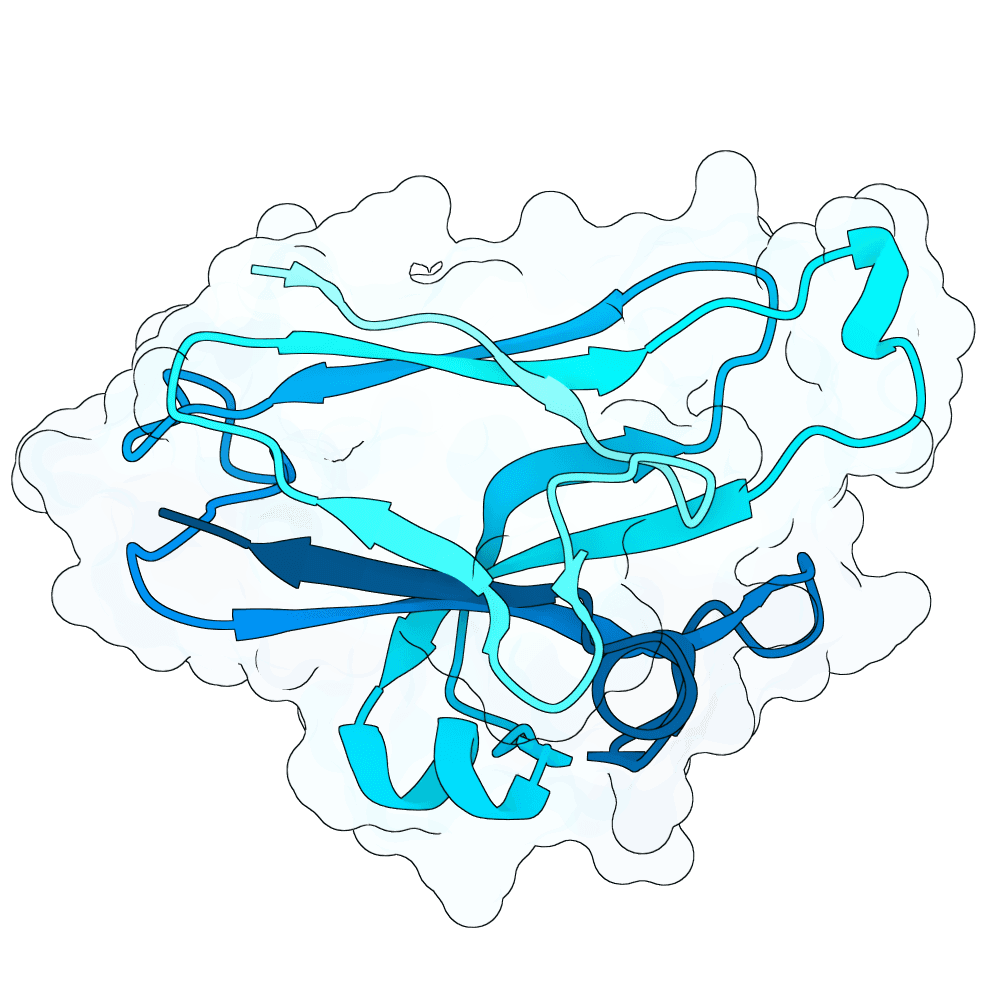
The Nipah virus (NiV) entry mechanism depends on the interaction between the viral G glycoprotein (NiV-G) and the host receptor Ephrin-B2. While soluble Ephrin-B2 can theoretically serve as a decoy receptor, its wild-type (WT) form is severely limited by two factors: promiscuous binding to endogenous Eph receptors (leading to toxicity and pharmacokinetic sinks) and moderate monomeric affinity. Our submission addresses these limitations through two progressively engineered candidates: B2_MPNN and B2_MPNN_Folden. Our approach posits that effective neutralization requires decoupling viral affinity from host signaling function, followed by the re-engineering of the scaffold to exploit the trimeric geometry of the viral envelope.
Candidate 1: B2_MPNN - The Optimized Specificity Scaffold
Hypothesis: We hypothesize that a “super-mutant” Ephrin-B2 monomer, combining the affinity-enhancing L124A mutation with the specificity-enhancing D62Q/Q130L/V167L triple mutation, will create a safe, high-affinity interface. We further hypothesize that ProteinMPNN redesign of the N-terminal flexible region will rectify stability issues associated with soluble domain truncation.
The Affinity Anchor (L124A): Central to our design is the L124A mutation. Structural kinetics data indicate that while L124A maintains a similar on-rate (k_{on}) to WT, it drastically reduces the off-rate (k_{off}) by over 10-fold (2.37 \times 10^{-6} vs 2.26 \times 10^{-5}). This “slow-off” phenotype is critical for a decoy, as it ensures that once the inhibitor binds to the viral spike, it remains engaged for a biologically relevant duration, effectively blocking viral entry.
The Specificity Filter (D62Q/Q130L/V167L): To mitigate off-target effects, we integrated a triple mutation set. D62Q disrupts the “phenylalanine hook” conformation required for Eph receptor binding, acting as a primary specificity switch. However, D62Q alone leaves residual affinity for EphB3 and EphB4. The addition of Q130L and V167L creates a combinatorial effect that effectively “blinds” the decoy to the human proteome while maintaining recognition of the conserved Henipavirus G interface. This ensures the therapeutic is not sequestered by host tissues.
Deep Learning Stabilization: We utilized ProteinMPNN at a low sampling temperature (T=0.2) to redesign the flexible N-terminus (residues 31-44). This region is often disordered in crystal structures. By generating sequences with high local structural probability, we aim to minimize entropic penalties upon folding and improve the recombinant yield of the protein.
Candidate 2: B2_MPNN_Folden - The Avidity-Engineered Trimer
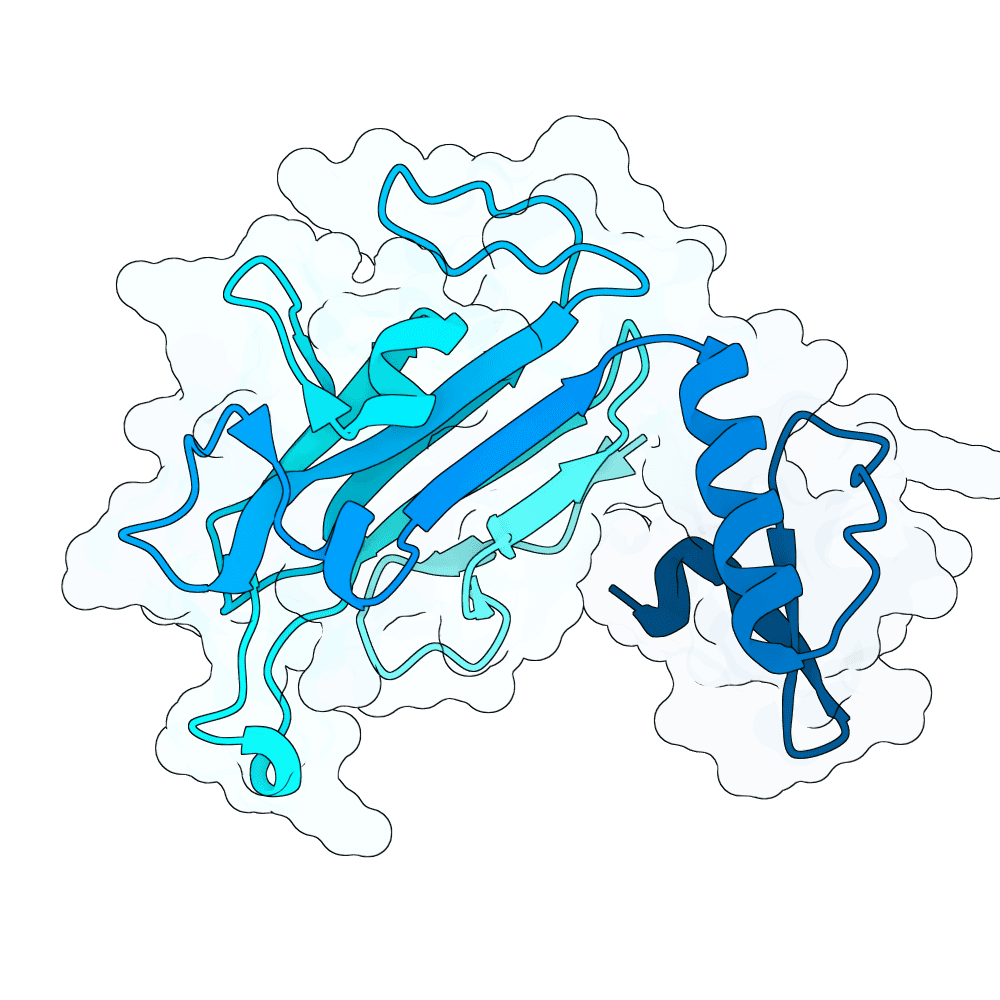
Hypothesis: We hypothesize that fusing the optimized B2_MPNN monomer to a T4 foldon trimerization domain via a rigid linker will result in a trivalent binder that engages the homotrimeric NiV-G spike with immense avidity, theoretically enhancing the functional affinity by orders of magnitude (pM to fM range).
The Physics of Avidity: NiV-G exists as a trimer on the viral membrane. A monomeric binder interacts in a 1:1 stoichiometric ratio. By matching this symmetry with a trimeric decoy, we enable multipoint binding. Once the first RBD engages, the effective local concentration of the remaining two RBDs becomes infinite relative to the other G subunits. For the complex to dissociate, all three interactions must break simultaneously, an event of vanishingly low probability.
Structural Logic (Rigid Linker & Foldon): We selected the T4 fibritin foldon for its rapid, obligate folding kinetics, ensuring a homogeneous trimeric population. Crucially, we employed a rigid alpha-helical linker (EAAAK) rather than a flexible Gly-Ser linker. A rigid linker acts as a spacer arm, reducing the entropic cost of binding by pre-orienting the RBDs and preventing steric collapse between the domains. This design intends to maximize the ipSAE score by presenting a structurally defined complex that AlphaFold can predict with high confidence, avoiding penalties associated with disordered flexible linkers.
Conclusion:
This submission represents a “Design-by-Subtraction/Addition” strategy: subtracting host toxicity via specificity mutations, adding viral potency via L124A, and multiplying efficacy via foldon-mediated avidity. We believe B2_MPNN provides a robust baseline, while B2_MPNN_Folden offers a high-risk, high-reward geometric solution to viral neutralization.