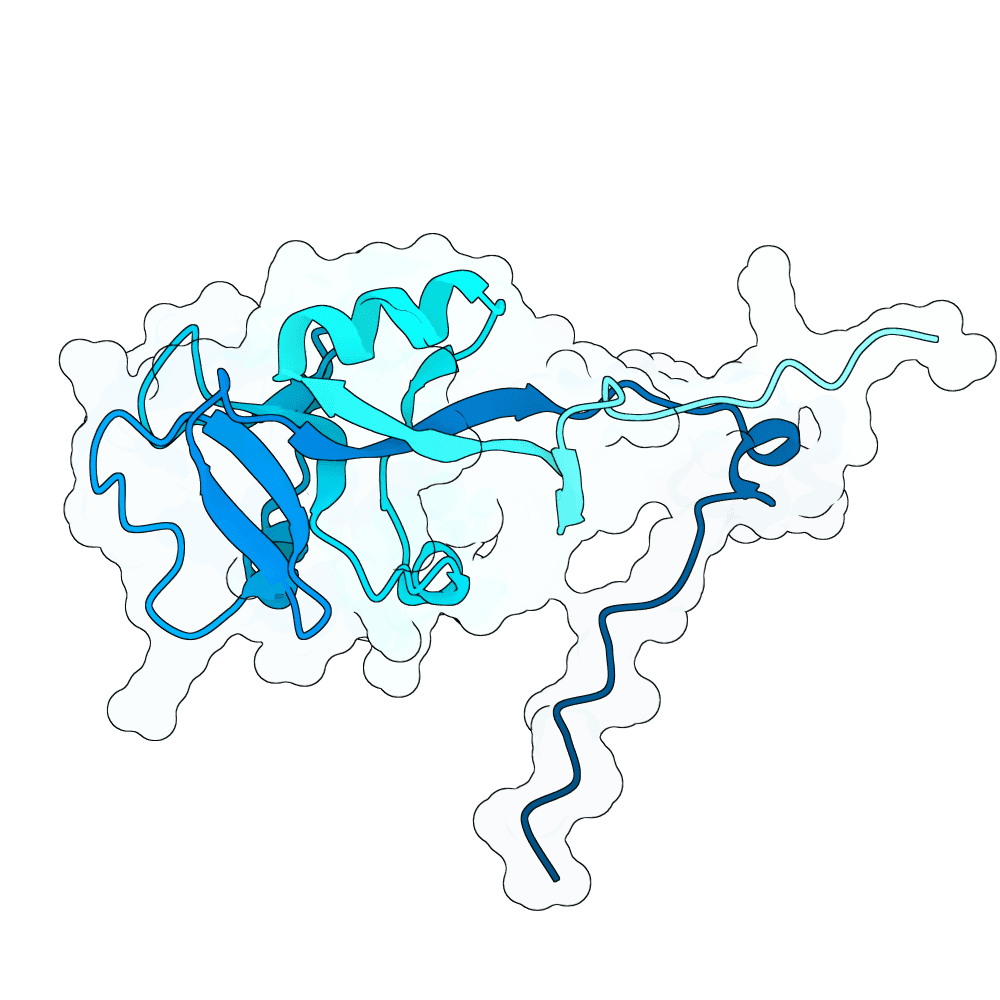
CD209 (also known as DC-SIGN) is a C-type lectin receptor that functions as a secondary attachment factor for a wide range of enveloped viruses, including HIV, Ebola, dengue, and coronaviruses. It recognizes high-mannose glycans on viral glycoproteins and facilitates viral capture and transfer to target cells. Nipah virus has similarly been shown to exploit CD209 for entry, and overexpression of CD209 in host cells increases susceptibility to Nipah infection. Based on this evidence, I designed a novel protein derived from the CD209 viral-binding region to act as a decoy or competitive inhibitor of Nipah G protein binding. The design maintains the overall lectin fold and glycan-recognition geometry of CD209 but introduces targeted amino acid substitutions to create a unique sequence distinct from the native protein. These substitutions, such as L→V, W→F, E→D, S→T, and F→Y, were selected to preserve structural integrity while optimizing solubility, stability, and manufacturability. Structural modeling confirmed that the engineered variant retains the carbohydrate-recognition pocket characteristic of CD209, suggesting it can still interact with high-mannose glycans presented on the Nipah G surface. By removing transmembrane and cytoplasmic domains and altering residues involved in clustering and signaling, the design minimizes the potential for immune activation or unwanted cellular signaling. This engineered CD209 variant is expected to act as a soluble decoy, competitively blocking Nipah attachment to host cells and thereby reducing infection efficiency. Because CD209 recognizes glycan patterns rather than specific peptide sequences, the modified protein may also provide broader protection against related henipaviruses with similar glycosylation profiles. Experimental validation will include glycan array binding, surface plasmon resonance assays with recombinant Nipah G, and pseudovirus neutralization assays to assess inhibitory activity. Overall, this approach combines structural mimicry with rational sequence engineering to generate a novel, non-native protein capable of targeting the Nipah G attachment pathway through a CD209-inspired mechanism.