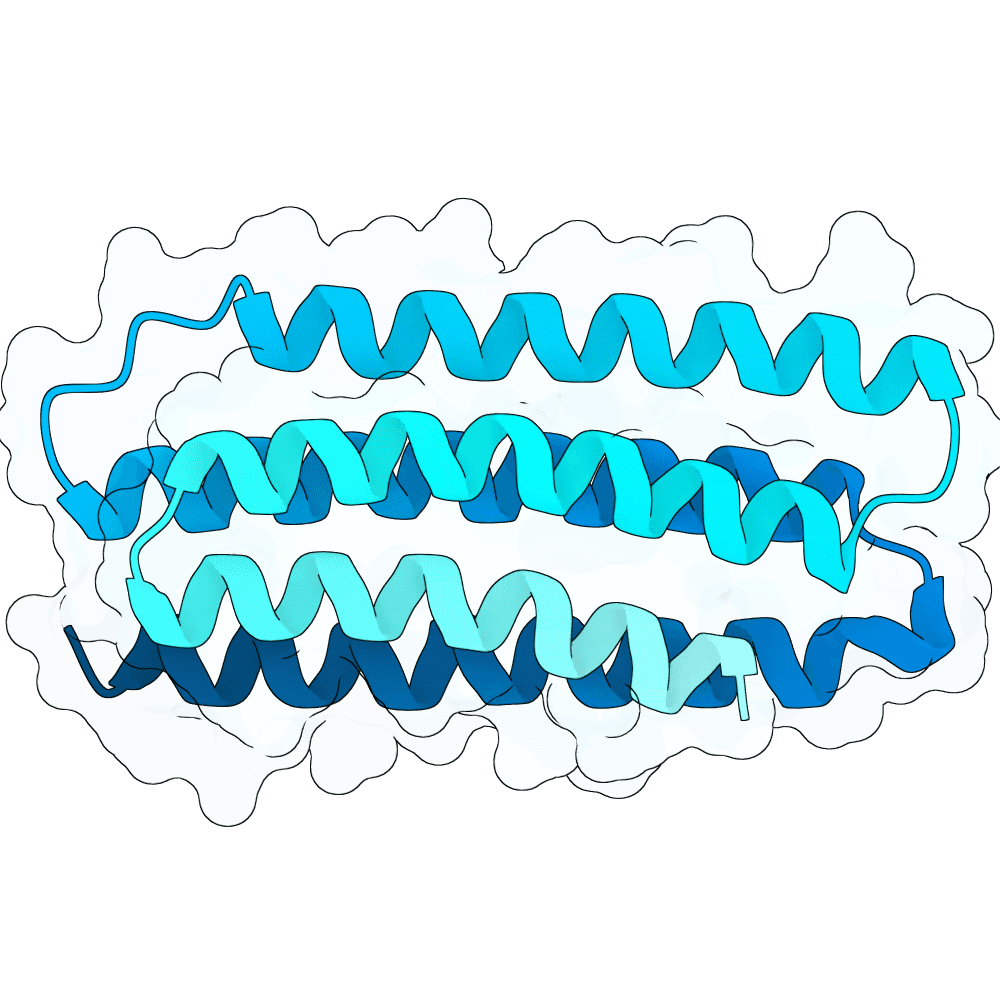
Description
We used Pesto (https://pesto.epfl.ch/) with the pdb structure from the predicted Glycoprotein G sequence fragment used in the competition. We identified the following sites as likely good interfaces for protein interaction (1..94,235,255,256,281,332,371,388,434,436,437,438,489,490). Based on this information, we created 4 different designs for Boltzgen (1: No binding sites specified, 2: positions 1..94, 3: 235,255,256,281 & 4: 332,371,388,434..438,489,490). We designed an end-to-end Nextflow pipeline for designing protein binders and evaluating them using Seqera AI (https://seqera.io/ask-ai/chat-v2). The pipeline takes as input a samplesheet containing paths to design files for Boltzgen in yaml format and configuration options (like the target pdb file, the number of designs, the budget for boltzgen and a precalculated MSA for the target sequence). We used our 4 designs mentioned above with num_designs=100 and budget=10. We took the 10 best ranked binders from boltzgen per design campaign and redesign 3 new sequences using ProteinMPNN (https://github.com/dauparas/ProteinMPNN) with default parameters. We then refold the original and ProteinMPNN sequences in a complex with Nipah virus Glycoprotein G again using Boltz2 (https://github.com/jwohlwend/boltz) and used the results to calculate ipSAE scores, binding affinity using Prodigy (https://github.com/haddocking/prodigy) and run it through Foldseek (https://github.com/steineggerlab/foldseek) against the Alphafold database to identify any potential similar structures / sequences. We collate all of these metrics into a final table per design campaign that allows us to easily identify the best scoring binder designs. We executed this end-to-end pipeline on Nebius (https://nebius.com/) infrastructure using their managed Kubernetes product executed via Seqera Platform (seqera.io). Using Nextflow allowed us to connect various different tools and scripts in a reproducible way and specify multiple design campaigns we wanted to pursue without worrying about scheduling and execution. The entire proof-of-principle pipeline is publicly available on Github under MIT license: https://github.com/seqeralabs/nf-proteindesign