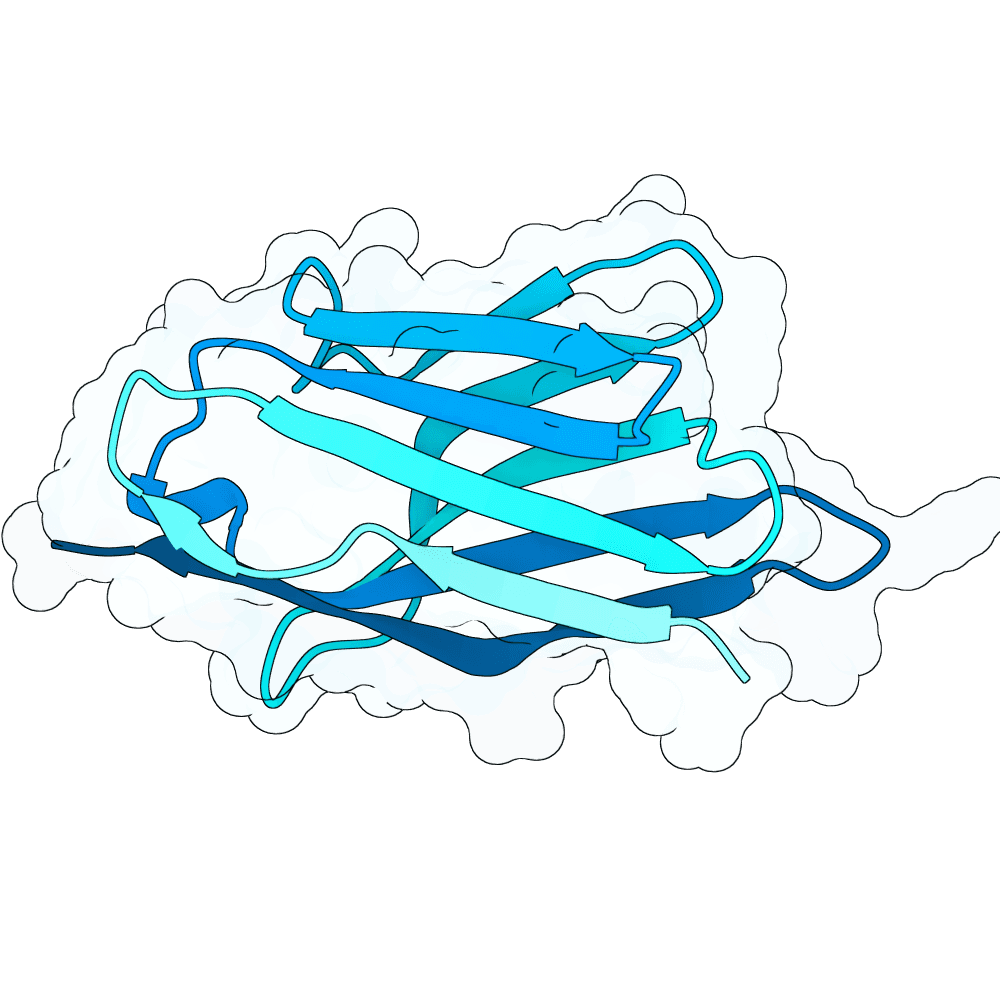
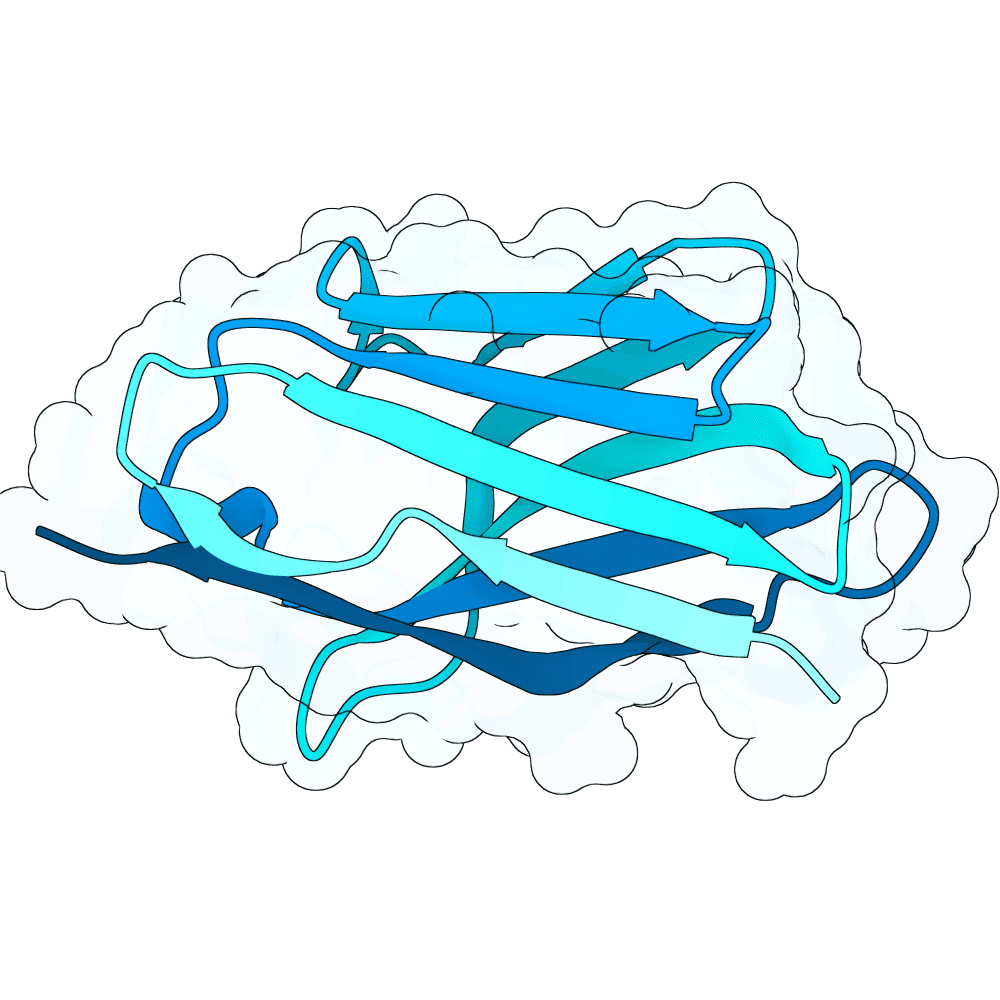
Description
We utilized our proprietary generative model, IgGM-1.5, to design the VHH sequences. This updated version of IgGM features an optimized AF3-like architecture and was pre-trained on complex data from the PDB, yielding superior structure prediction and sequence recovery performance compared to its predecessor. It also incorporates an additional confidence scoring head to assist in filtering high-quality predictions. Unlike conventional binder design pipelines such as RFDiffusion or BoltzGen, which typically rely on a two-step process (backbone generation followed by MPNN-based inverse folding), IgGM-1.5 directly outputs both the 3D structure and the corresponding amino acid sequence. This integrated approach achieves a de novo co-design of sequence and structure, ensuring high physical consistency and structural integrity of the designed binders. The generated pool was subjected to a strict in-silico screening process utilizing the following filters: Novelty Assessment: Candidates were required to exhibit at least a 25% CDR edit distance compared to known single-domain antibodies in the SAbDab database, aligning with competition thresholds. Structural Prediction & Epitope Matching: We utilized AlphaFold-3 and Protenix to predict the VHH-RBX1 complex structures. Sequences were filtered strictly using an ipTM > 0.75 and pTM > 0.75 threshold. Crucially, the predicted binding interface was geometrically verified to ensure greater than 50% overlap with our predefined E2-interaction hot spots. For all structural prediction methods, the input Multiple Sequence Alignments (MSAs) were generated using the ColabFold-pipeline. We employed a sampling strategy of 5 random seeds with 5 samples per seed; the confidence scores reported and used for filtering correspond to the conformation with the highest overall confidence score among all samples. Structural Consistency: We employed AF2Rank under the AlphaFold-Multimer landscape to evaluate the initial complex structures predicted natively by IgGM-1.5, retaining candidates with an ipTM > 0.75. Similar to the structural prediction pipeline, the MSAs are inputted for AF2Rank to ensure consistency in evolutionary information. Frequency-Based Selection: We incorporated the IgGM-1.5 sequence generation frequency as a discriminator, as our prior work indicates this metric correlates positively with affinity maturation potential and overall success in de novo design.
A method description can be downloaded in https://drive.google.com/file/d/1nzpLlDufu39ppLcKwkxntkHVt5htxibJ/view?usp=drive_link