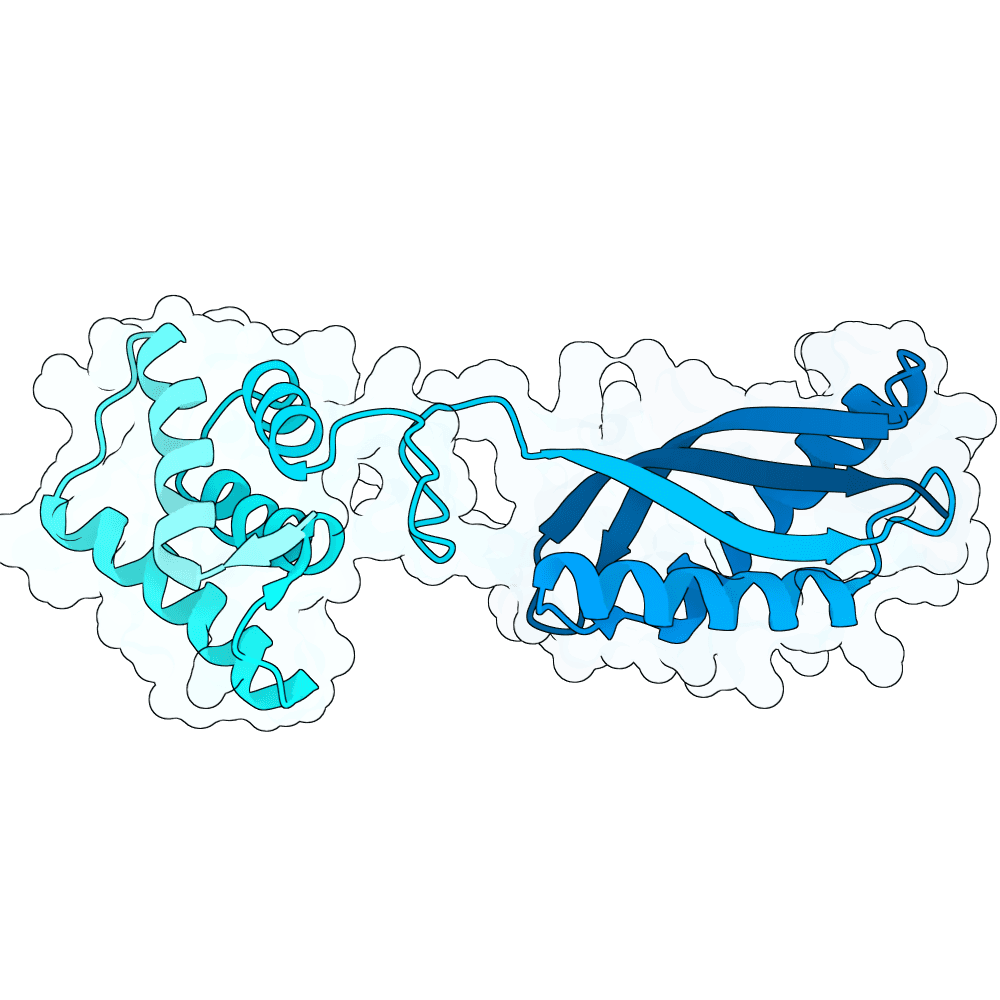
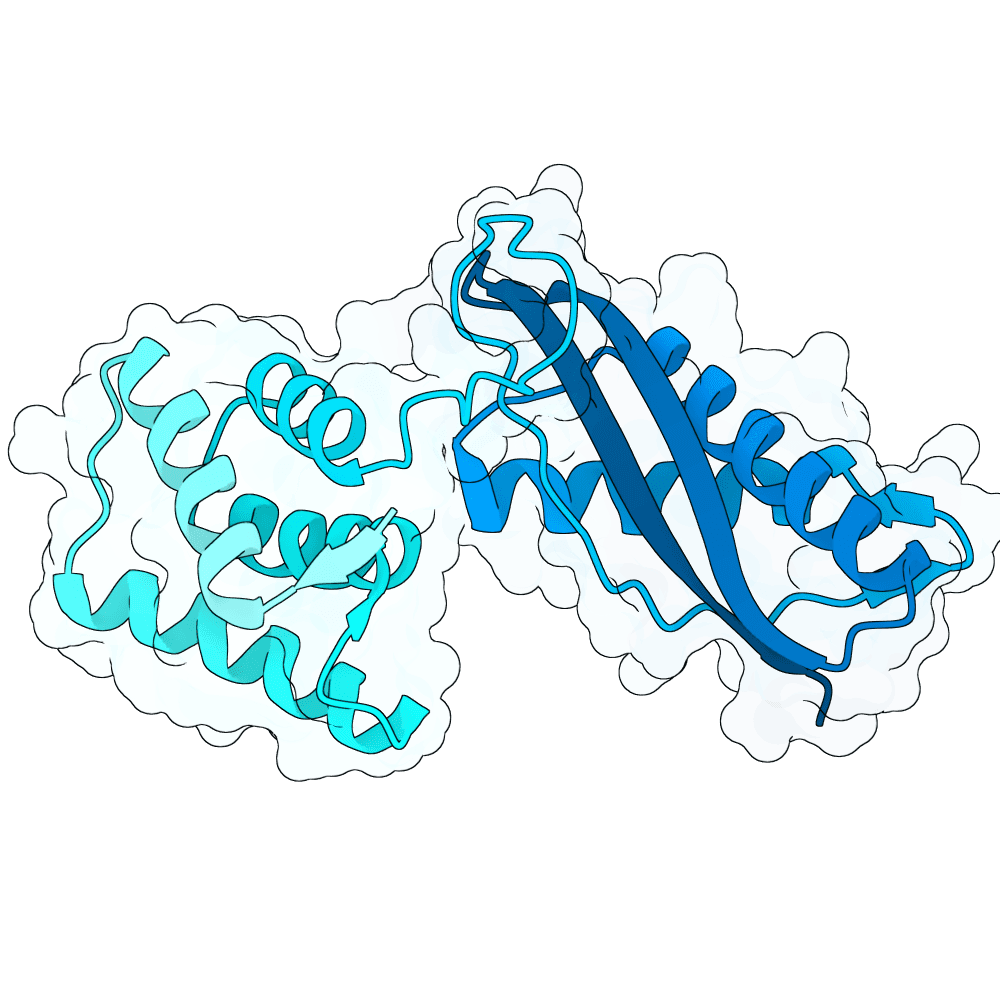
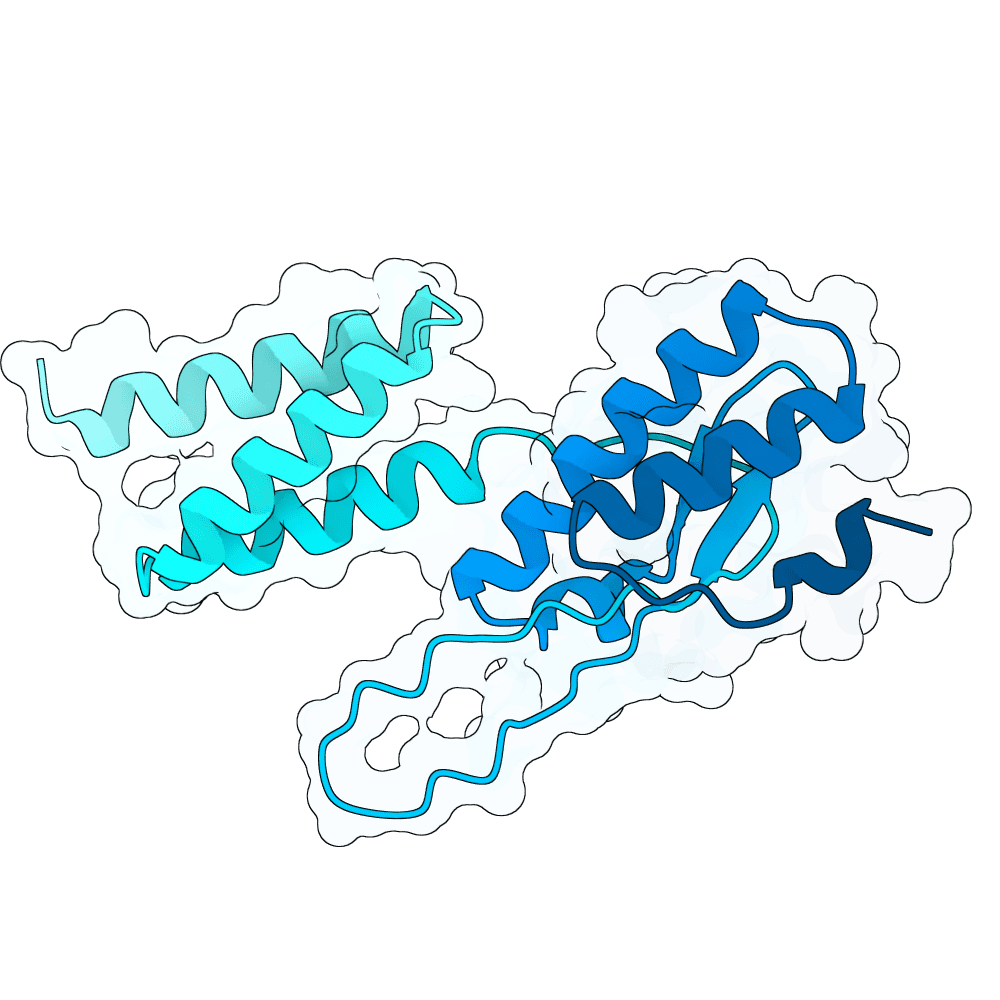
Bispecific Fusion Binder Strategy
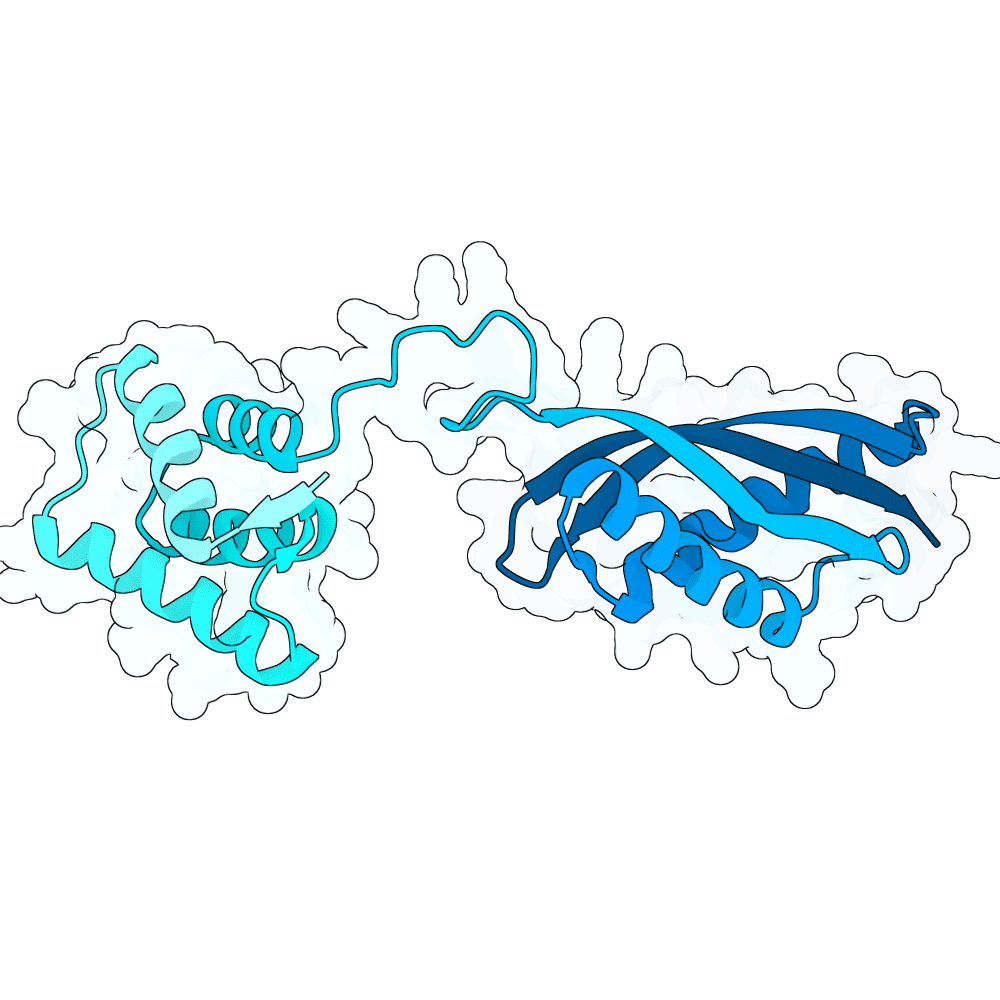
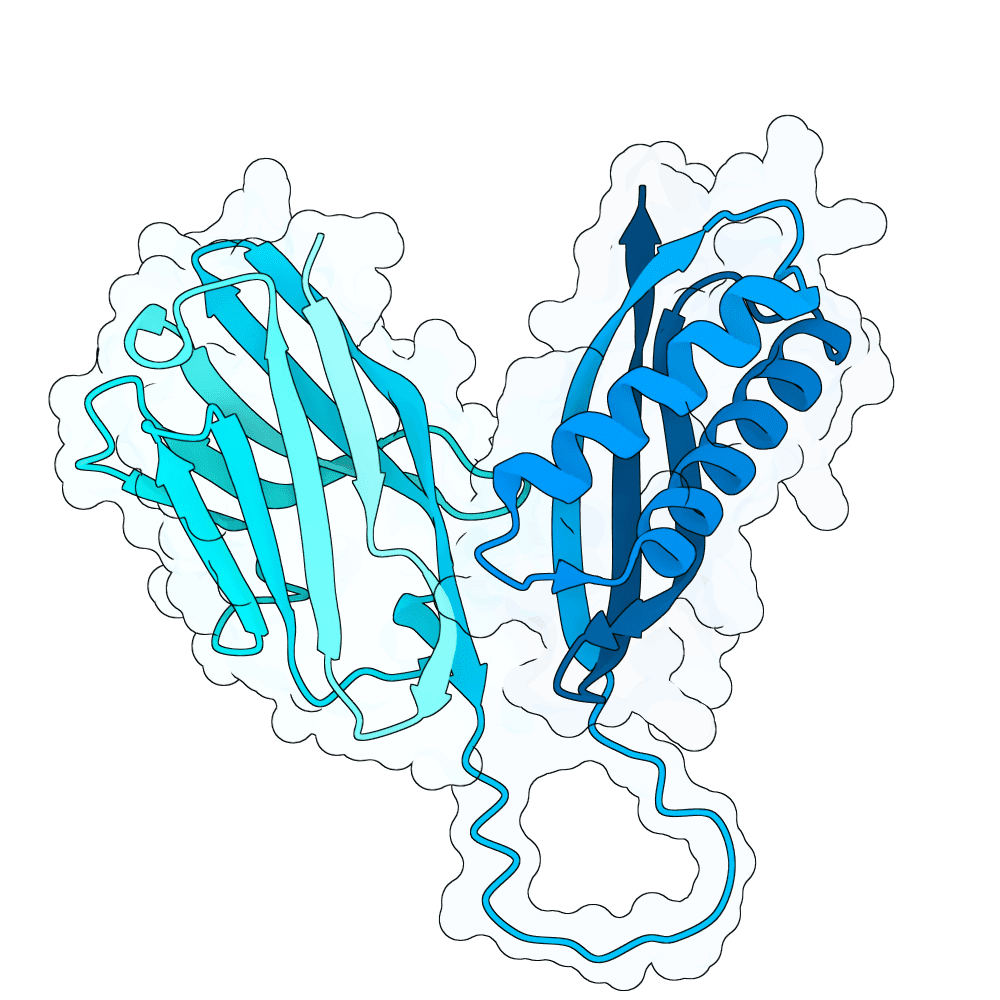
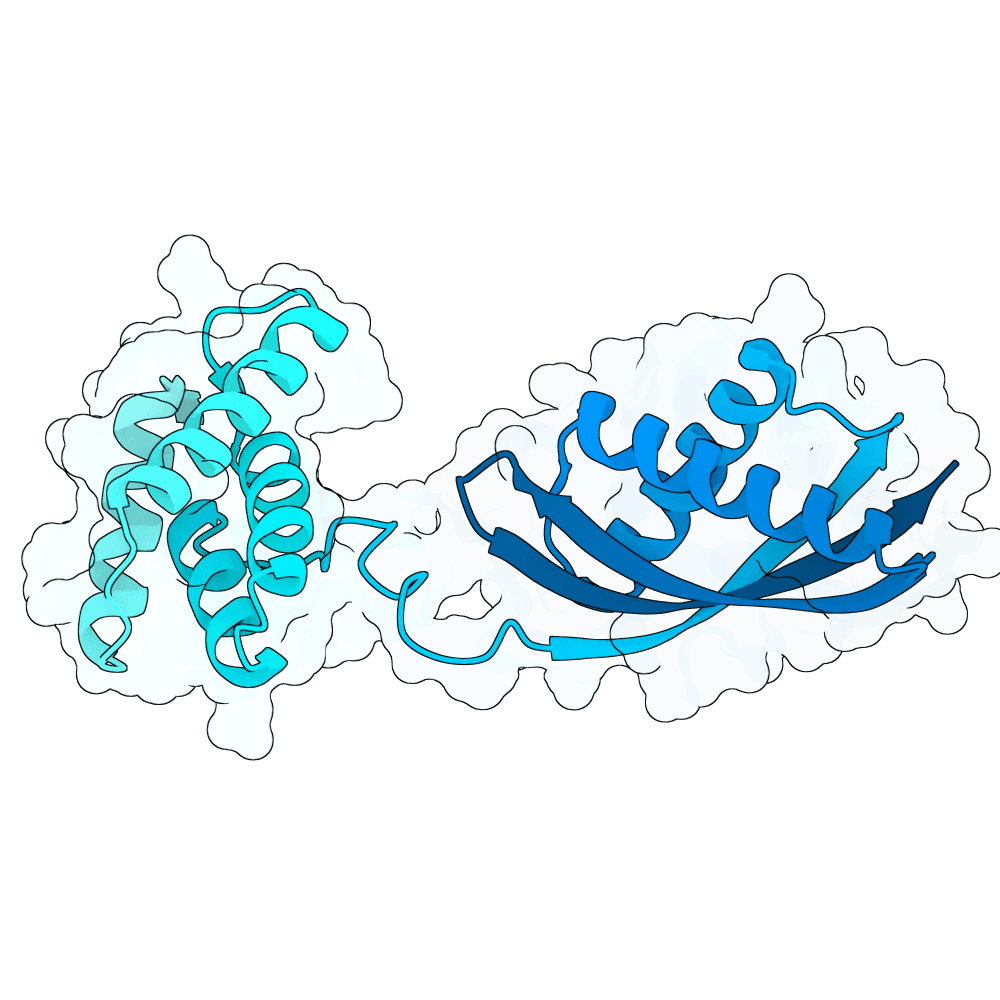
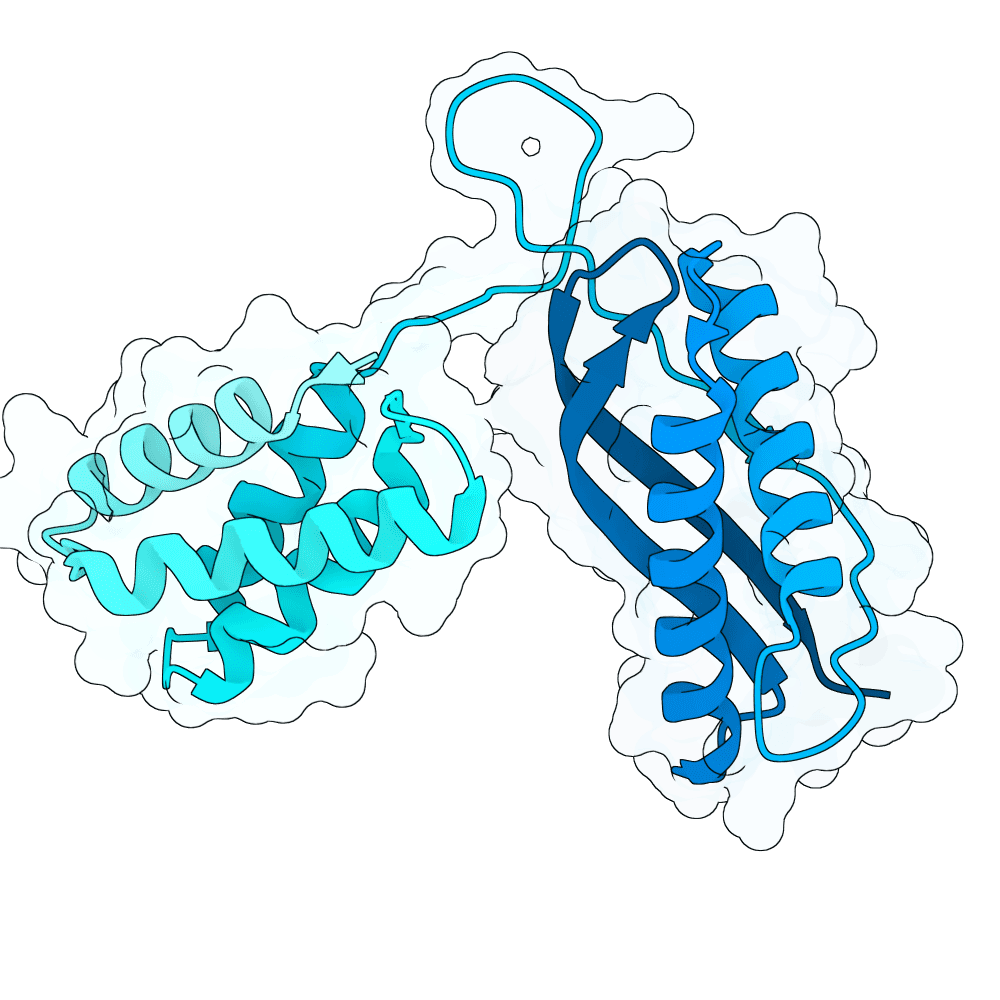
The central design hypothesis was that linking two single-domain binders against non-overlapping RBX1 epitopes into one
construct would yield tighter engagement through avidity than either domain alone. This approach was motivated by the
RBX1 PDB ensemble, where endogenous partners—cullins, E2 enzymes, and NEDD8 machinery—simultaneously contact
multiple distinct surface regions, indicating the target naturally supports multi-mode recognition.
Epitope patches were identified by extracting contact fingerprints from all available RBX1 complex structures at 4.5 Å
(heavy-atom) and 8.0 Å (Cα) cutoffs with six-class chemistry annotation. Spatial clustering partitioned the RBX1 surface into
discrete regions, and each designed binder was assigned to the patch it engaged. Compatible fusion pairs were required to
have non-overlapping footprints. Constructs were assembled with flexible GS linkers (10–20 aa); optimal N-to-C orientation
was determined by termini distance analysis, with steric clash filtering removing incompatible pairs. Interface contacts for
each partner were frozen during ProteinMPNN linker redesign and enforced as distance constraints during structure
prediction. Pairs were ranked by a compound score: per-domain ipSAE was mapped to P(bind) via a logistic function and
pairs ranked by P(A)×P(B). A key limitation is that Boltz-2 confidence metrics degrade with construct length; full-length
fusion refolds showed ipSAE reductions of ~0.35 relative to single-domain predictions, so fusion rankings are treated as
relative rather than absolute.
Binder Generation and Screening
Four generators were benchmarked on the same target. BoltzGen (Boltzmann generator, backbone and sequence
co-generated) was the primary source of production candidates; 53% of 90–130 aa outputs were antibody frameworks
identified by FR1 motif scanning and excluded. Proteina-Complexa (flow-matching with AF2-guided beam search,
n_branch=4, beam_width=5) produced strong interfaces (median ipSAE ~0.70) but initially poor monomer folds (pLDDT
0.56); increasing the pLDDT reward weight to 0.8 and applying ProteinMPNN redesign improved pass rates to 7/50, with a
top ipSAE of 0.89. RFdiffusion2 generated backbone-only outputs conditioned on RBX1 hotspot patches, with
ProteinMPNN for inverse folding. BindCraft was run for comparison only. All designs passed a four-gate screen using
Boltz-2 structure prediction (200 diffusion steps, 3 recycling): monomer pLDDT ≥0.70, complex iPTM ≥0.50 and iPAE
≤0.45, ipSAE ≥0.70, and target-dependency confirmation. The iPAE threshold was relaxed from 0.35 to 0.45 after identifying
a size-dependent bias that incorrectly rejected 47% of viable candidates on this small target.
Sequence Optimization and Lead Refinement
ProteinMPNN was used for inverse folding and iterative refinement. Soft interface bias (bias_by_res, strength=2.0) had little
effect—only 1/32 biased positions adopted the target residue at T=0.15—and hard-substitution of natural partner residues at
interface positions reduced mean ipSAE from 0.92 to 0.55, confirming that backbone geometry rather than residue identity
governs interface quality. ProteinMPNN's practical value was scaffold stabilization: designs with <20% interface mutations
had a 93% screen pass rate versus 59% for those with 30–40% interface mutations.
Top designs entered an iterative refinement loop: ProteinMPNN mutagenesis (T=0.1), Boltz-2 refolding, rescoring, with the
refolded structure—not the generator backbone—feeding back as input for the next round. Four of five test trajectories
reached ipSAE ≥0.90 within 2–3 rounds (best: 0.75→0.93, gains of 0.05–0.08 per round). The protocol was
counterproductive above ipSAE 0.85: 0/14 designs improved at that threshold (mean delta −0.11), placing the effective
optimization window at 0.80–0.85. A confound worth noting: 62% of initial refinement parents were antibody frameworks.
After restricting to de novo scaffolds only, the graduation rate fell from 13% to 3%
Structures and Methods PDF:
https://drive.google.com/drive/folders/173RgENHHzwcOjbI4iDPX5RcxxiYh0JhP?usp=drive_link