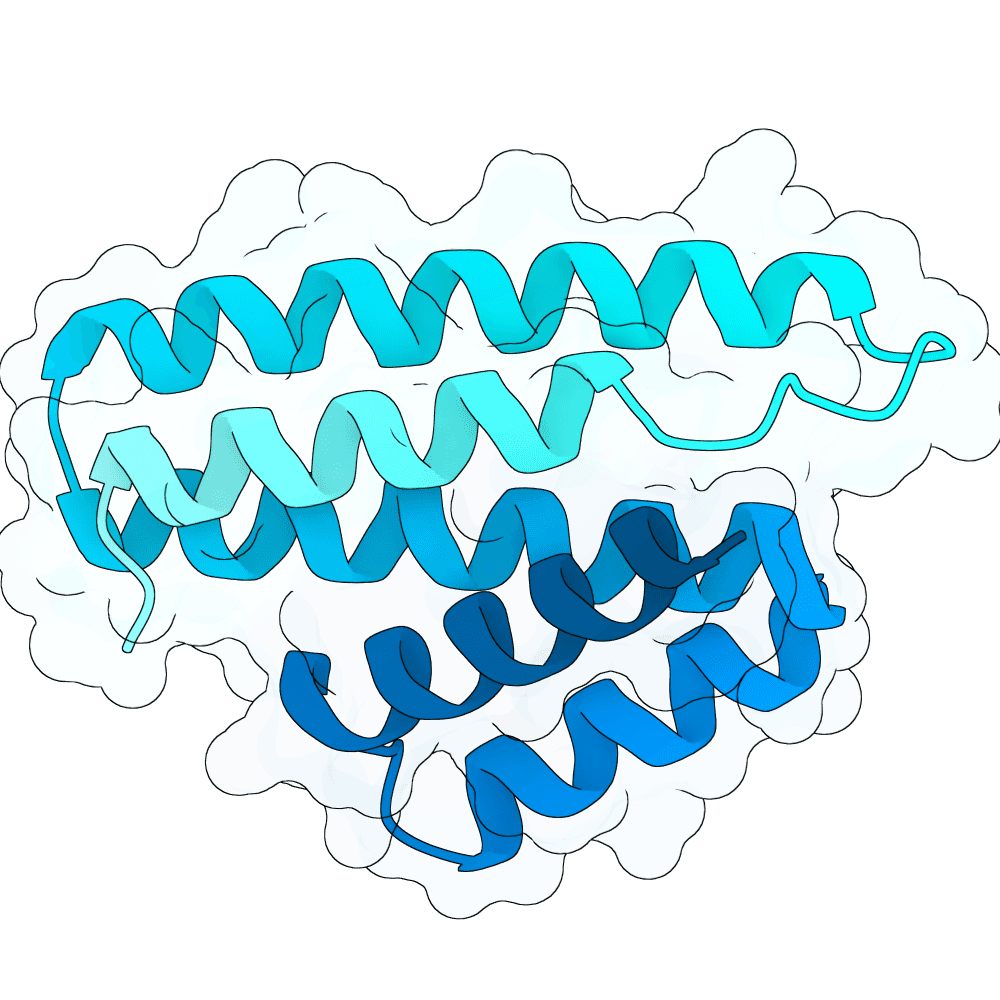
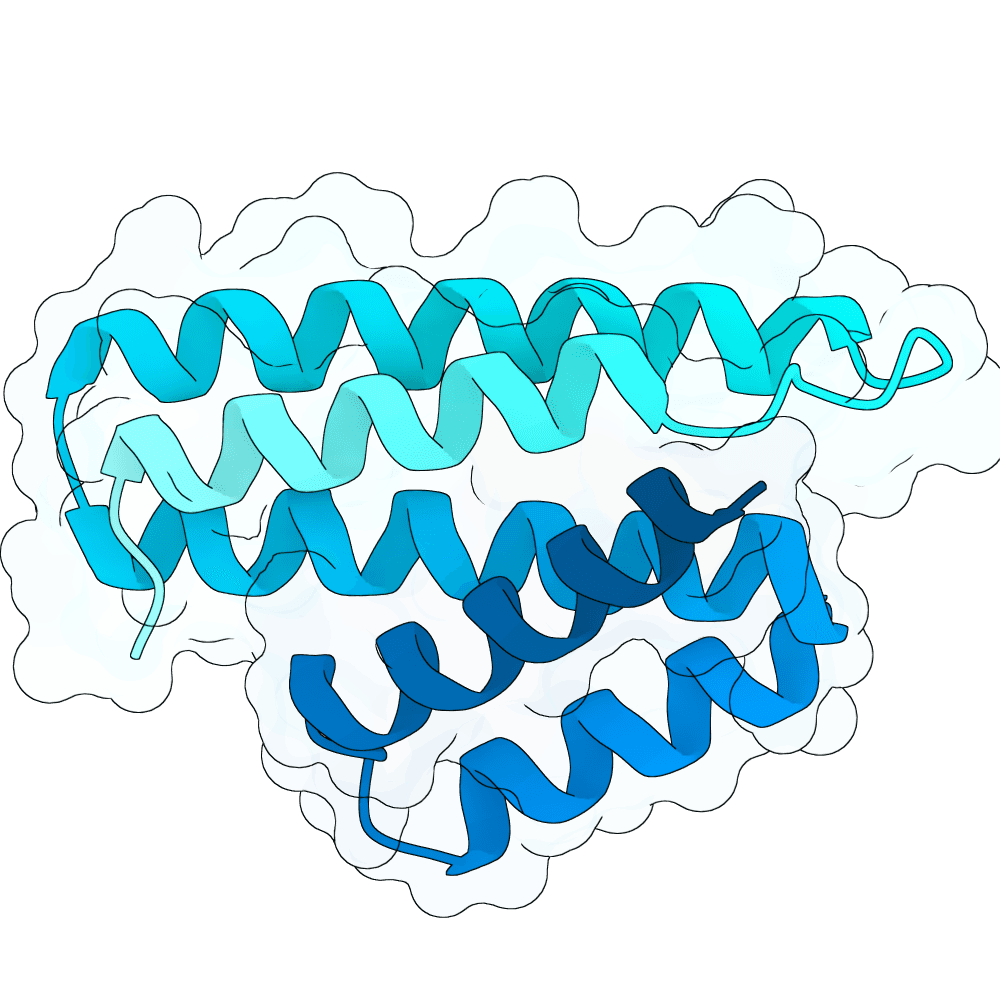
Description
Abstract: This report presents a de novo protein binder design workflow targeting RBX1 (PDB ID: 2LGV), the catalytic core of the Cullin-RING E3 ubiquitin ligase (CRL) complex, for the ICLR 2026 GEM Workshop Competition. Addressing RBX1’s dual challenges (intrinsically disordered N-terminus, C-terminal RING-H2 zinc finger with 3 zinc ions), we completed target analysis, 6 core binding hotspot identification, de novo design, sequence optimization, and candidate screening. All designs comply with competition rules, with final sequences achieving high binding confidence (ipTM ≥ 0.8) and specificity, holding potential to block RBX1-mediated CRL activity for cancer therapy.
- Target Background & Design Objectives
RBX1 (108 amino acids) is the core subunit of CRLs, the largest human E3 ubiquitin ligase family. It recruits E2 enzymes to mediate substrate ubiquitination, regulating ~20% of cellular proteins involved in cell cycle, DNA repair, and signal transduction. Dysregulated CRL activity drives tumor proliferation and metastasis in lung, breast, and colorectal cancers, making RBX1 a promising therapeutic target.
RBX1’s structure presents two key challenges: 1) disordered, flexible N-terminus hard to target; 2) C-terminal RING-H2 domain stabilized by 3 zinc ions (core E2-binding interface), requiring designs to preserve zinc coordination. Our goals: 1) de novo binders (≤250 AA) with high affinity/specificity; 2) target RBX1’s functional interface to block E2 recruitment; 3) full competition compliance.
- Structure Analysis & Binding Hotspot Identification
To ensure functional disruption, we conducted systematic structure analysis and hotspot validation: We downloaded RBX1’s monomer (PDB 2LGV) and its complexes (Cullin, E2) from RCSB PDB, mapped interface residues (hydrogen bonds, hydrophobic/electrostatic interactions) via PyMOL, and cross-validated with literature. We identified 6 core RING-H2 residues critical for RBX1’s function as our binding hotspots.
- Initial Design Exploration & Optimized Strategy
Initial exploration using RF Diffusion, AlphaFold 3, and ProteinMPNN failed (ipTM < 0.6, pLDDT < 0.7, poor complementarity). We switched to BindCraft with a tailored strategy: 1) Explicit constraints on RBX1’s functional interface and 6 hotspots; 2) Parameter tuning to preserve zinc coordination; 3) Multi-model hallucination (5 AlphaFold-Multimer models) to avoid overfitting; 4) Relaxed relaxation and screening (ipTM, pLDDT, buried surface area). This yielded high-quality binders (ipTM ≥ 0.8, pLDDT ≥ 0.85) meeting competition requirements.
- Sequence Optimization & Final Submission Screening
We optimized top core sequences via three strategies: 1) Stepwise single-residue extension with AlphaFold 3 validation; 2) Constrained re-design in BindCraft, with ScanNet to evaluate residue contribution, ProteinMPNN to optimize non-core regions (solubility/aggregation), and AlphaFold 3 re-validation; 3) Saturation mutagenesis of 3 key interface residues (~8000 combinations), retaining ~100 stable sequences, ranking via ProteinMPNN, and verifying via PyMOL. We finally selected 100 top sequences (ranked by binding affinity/confidence) for submission, fully complying with rules.
- Compliance & Expected Validation
All designs are de novo (no scaffolding/lead optimization), have ≥25% edit distance to UniRef50 proteins, and are ≤250 AA. Targeting RBX1’s functional interface, they are expected to block E2 recruitment and inhibit CRL activity. BLI validation will be conducted at Adaptyv’s Foundry. This workflow provides a reference for de novo binders targeting disordered/metal-coordinating targets.