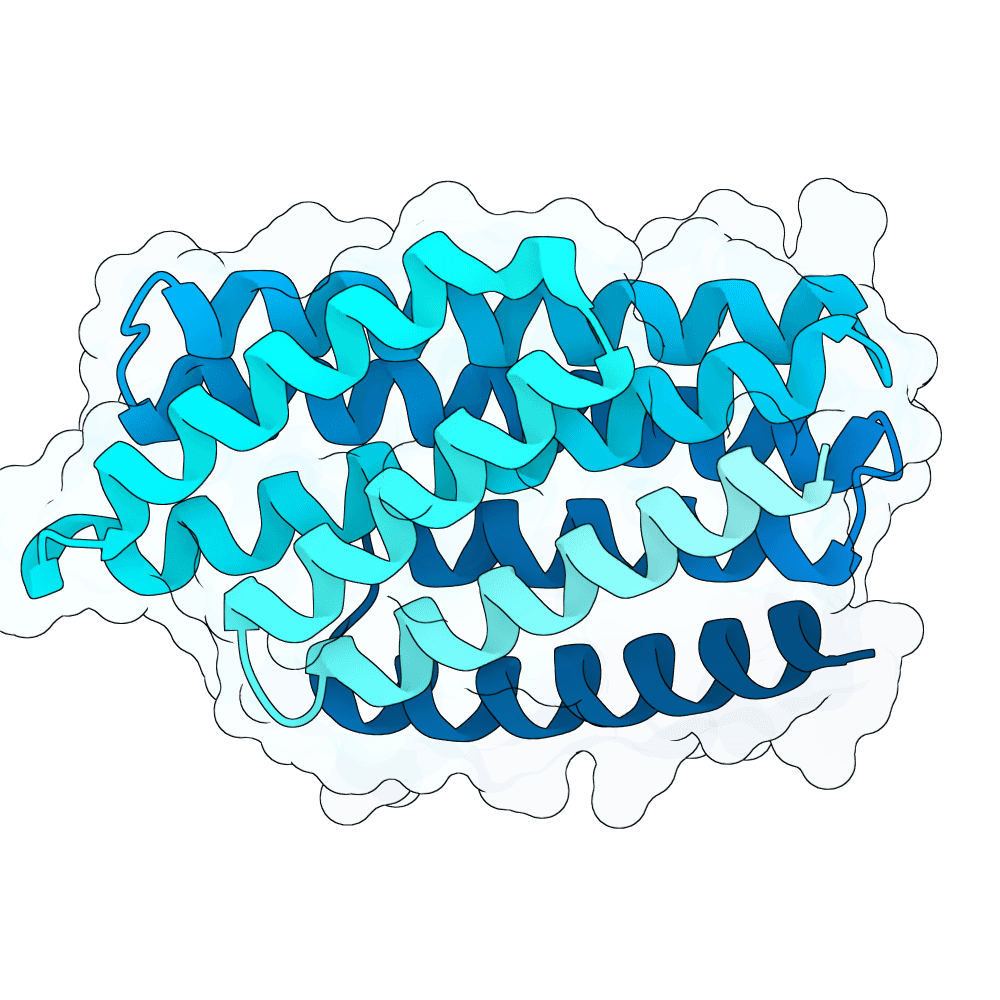
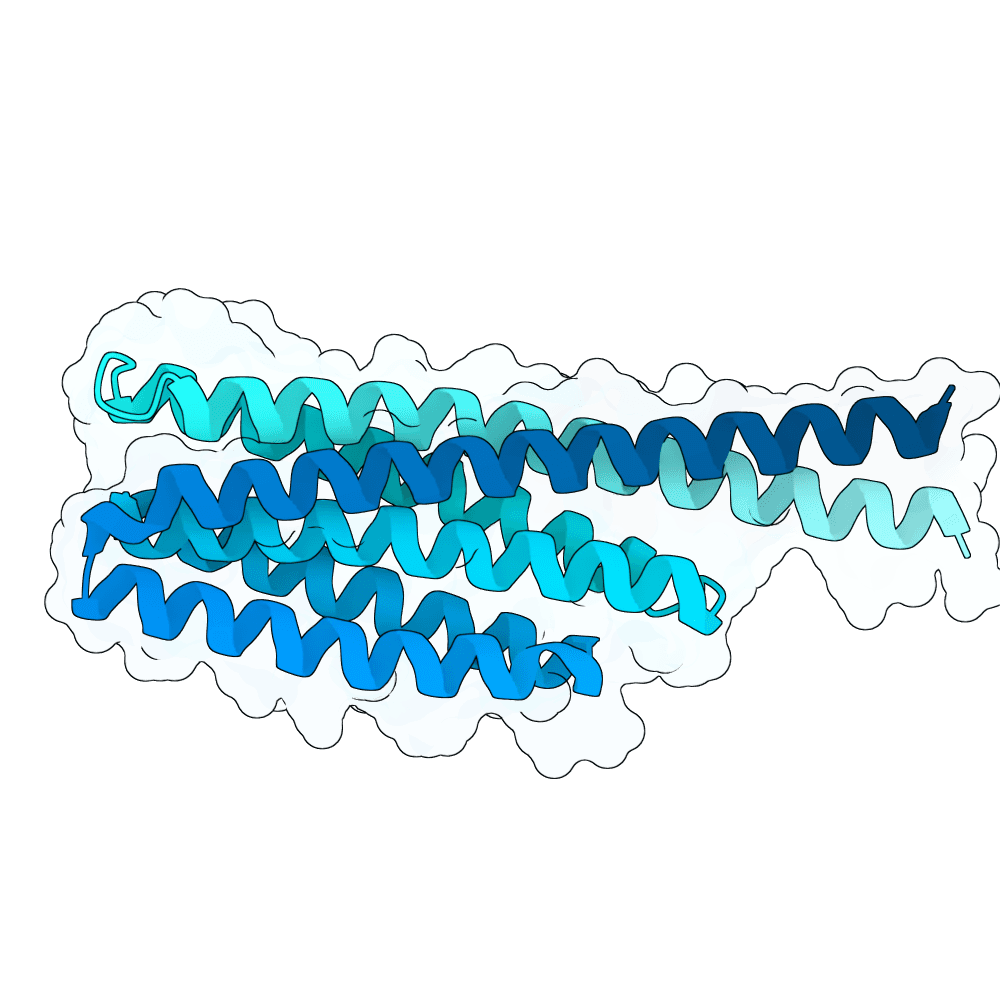
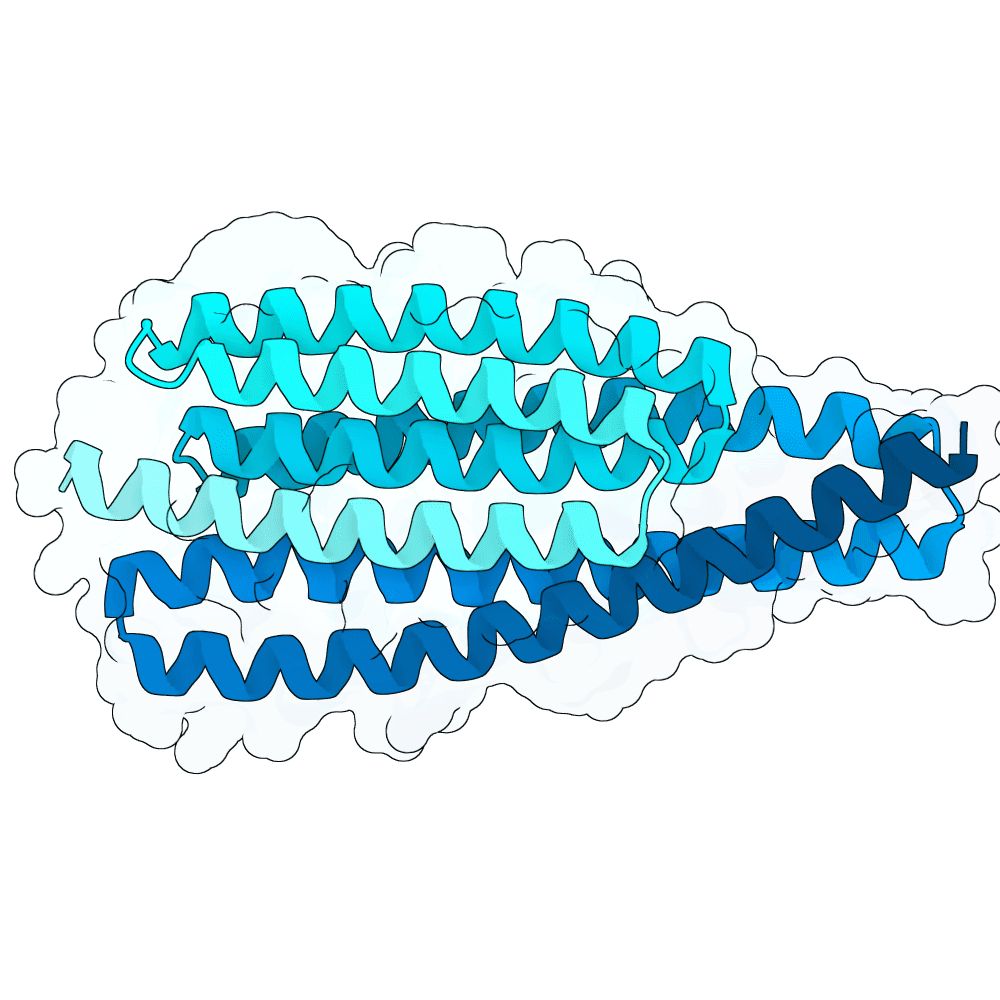
Description
Submission Overview — De Novo RBX1 Binder Design
Target
RBX1 (RING Box Protein 1, also known as ROC1) is a 108-amino acid E3 ubiquitin ligase component essential to the SCF complex. Its C-terminal RING-H2 domain is stabilised by three zinc ions in a cross-brace arrangement, creating a structurally rigid yet chemically sensitive interface. RBX1 is overexpressed in multiple human cancers and plays a central role in controlling the turnover of key regulatory proteins, making it a compelling therapeutic target. Its combination of a structured RING domain and a disordered N-terminus presents a genuine design challenge: hotspot selection must respect the metal-coordination geometry while engaging a useful and accessible surface.
Design Strategy
We developed a fully de novo binder design pipeline. No motif scaffolding, template reuse, or lead optimisation was applied. All submitted sequences are original designs verified to have edit distance ≥ 25% of sequence length relative to any entry in UniRef50 (MMseqs2 easy-search, identity threshold < 0.75).
The pipeline proceeded in four stages:
-
Backbone generation — RFdiffusion in binder mode, with hotspot guidance restricted to the solvent-exposed RING surface (residues 84–98). Zn-coordinating residues (C54, C57, H71, C74, C64, H68, C85, C88, H80, H84) were explicitly excluded from all hotspot sets to avoid targeting structurally fragile metal-binding motifs.
-
Sequence design — ProteinMPNN inverse folding on generated backbones to produce amino acid sequences compatible with the designed interfaces.
-
Dual-model structural validation — Each candidate was co-folded with RBX1 independently using Boltz-1 (v2.2.1) and Chai-1 (v0.6.1). Only sequences passing both Boltz ipTM > 0.55 and Chai ipTM > 0.55 were retained, providing orthogonal confidence across two architecturally distinct frameworks.
-
Multi-metric ranking — A weighted composite score integrated Boltz ipTM, Chai ipTM, interface pLDDT, 5 Å contact count, Boltz IPDE uncertainty proxy, and ESM2 normalised pseudo-log-likelihood. Missing metrics were handled by automatic weight re-normalisation.
To promote diversity, four generation branches (v2–v5) were run with distinct hotspot configurations spanning sparse anchor triplets through contiguous 8-residue sweeps. The final 10 designs span all four branches.
In-Silico Performance
From a combined 56-sequence pool, the top 10 candidates were selected. Top 5 designs achieved Boltz ipTM 0.74–0.82 and Chai ipTM 0.60–0.64 simultaneously. Interface pLDDT remained high (78–92) across all candidates. Hotspot contact rate spanned 0.33–0.93, confirming diversity in binding footprint.
Chai inter-chain PAE was recomputed from raw inference tensors for all 10 designs (10/10 success). Best values: v5_072 (15.94 Å), v4_098 (16.24 Å), v3_033 (17.82 Å).
The top-ranked design is v3_033 (final score 0.769; Boltz ipTM 0.82, Chai ipTM 0.64), followed by v4_098 (0.754) and v4_070 (0.731).
Methods Used
RFdiffusion · ProteinMPNN · Boltz-1 · Chai-1 · ESM2 · MMseqs2
All tools are open-source and were applied under non-commercial academic terms consistent with competition rules.
the detailed methods can be seen on https://drive.google.com/file/d/1NG41VYDDmlKODQc_wVLS73Bstv3SLV72/view?usp=sharing