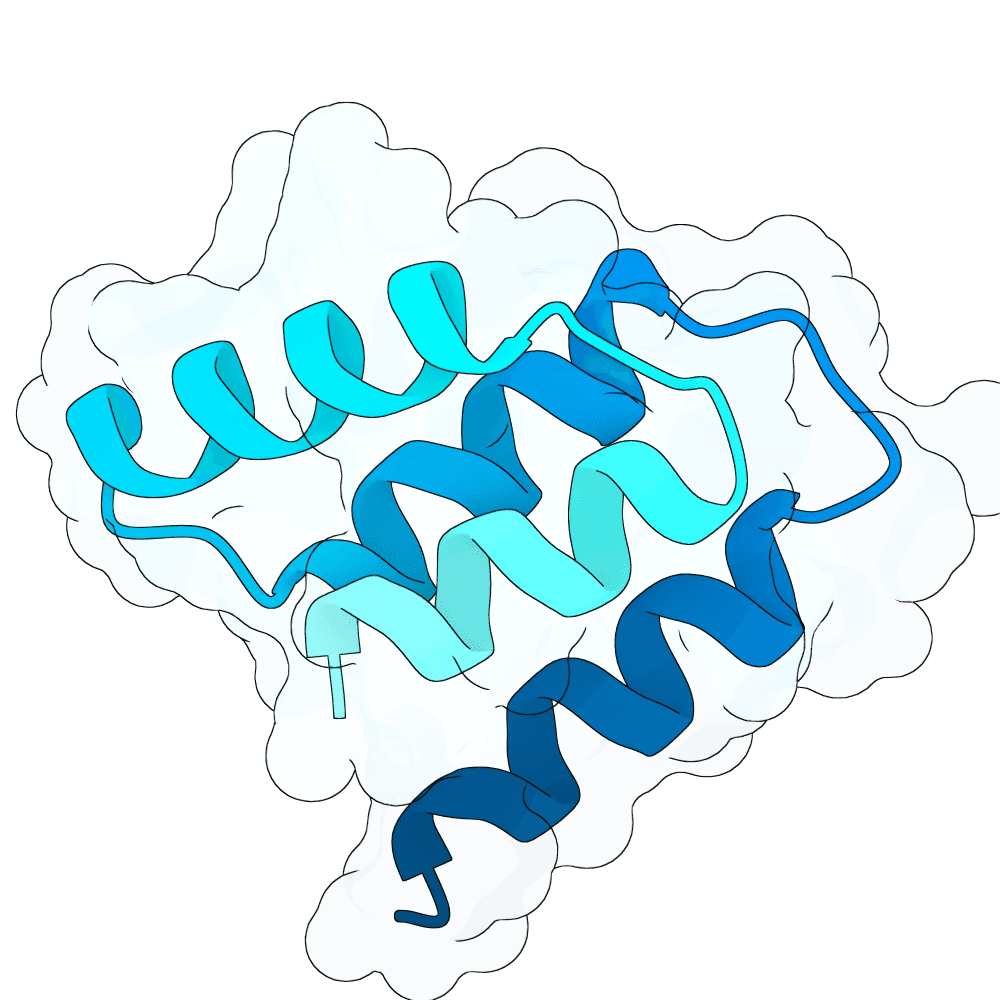
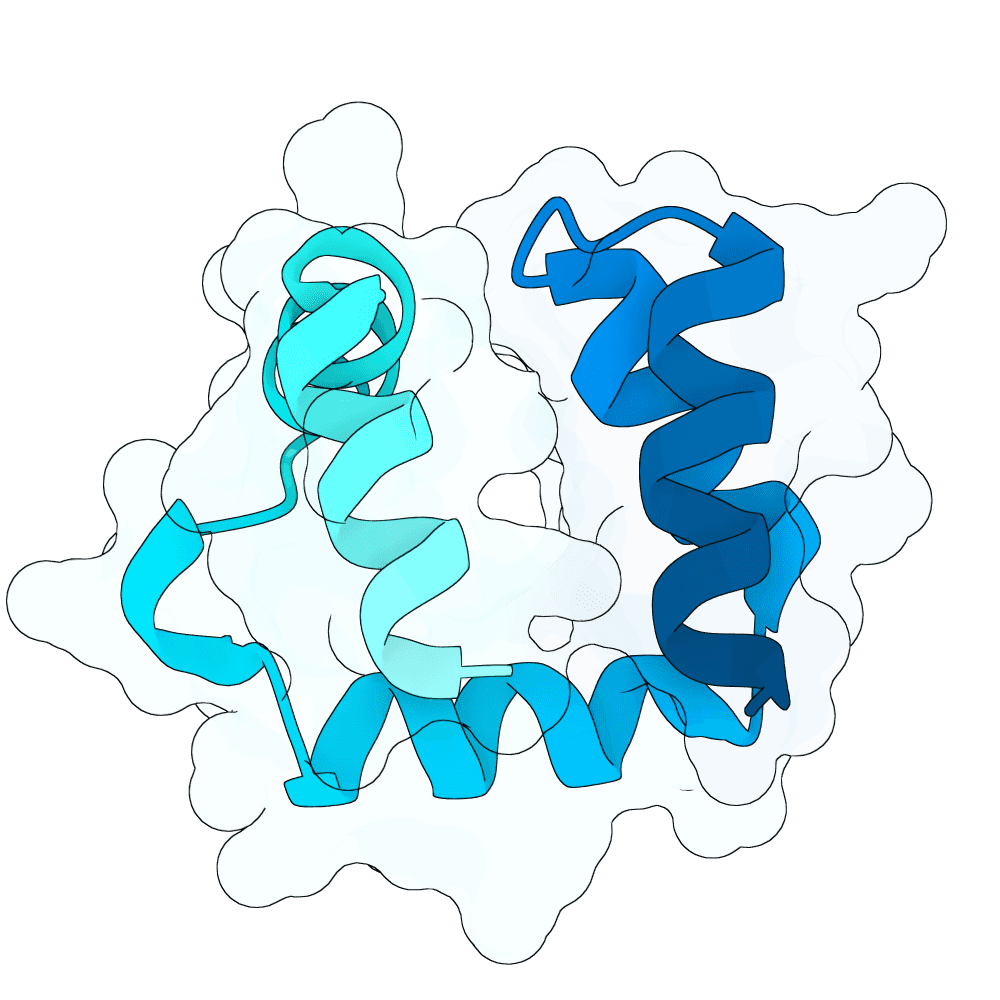
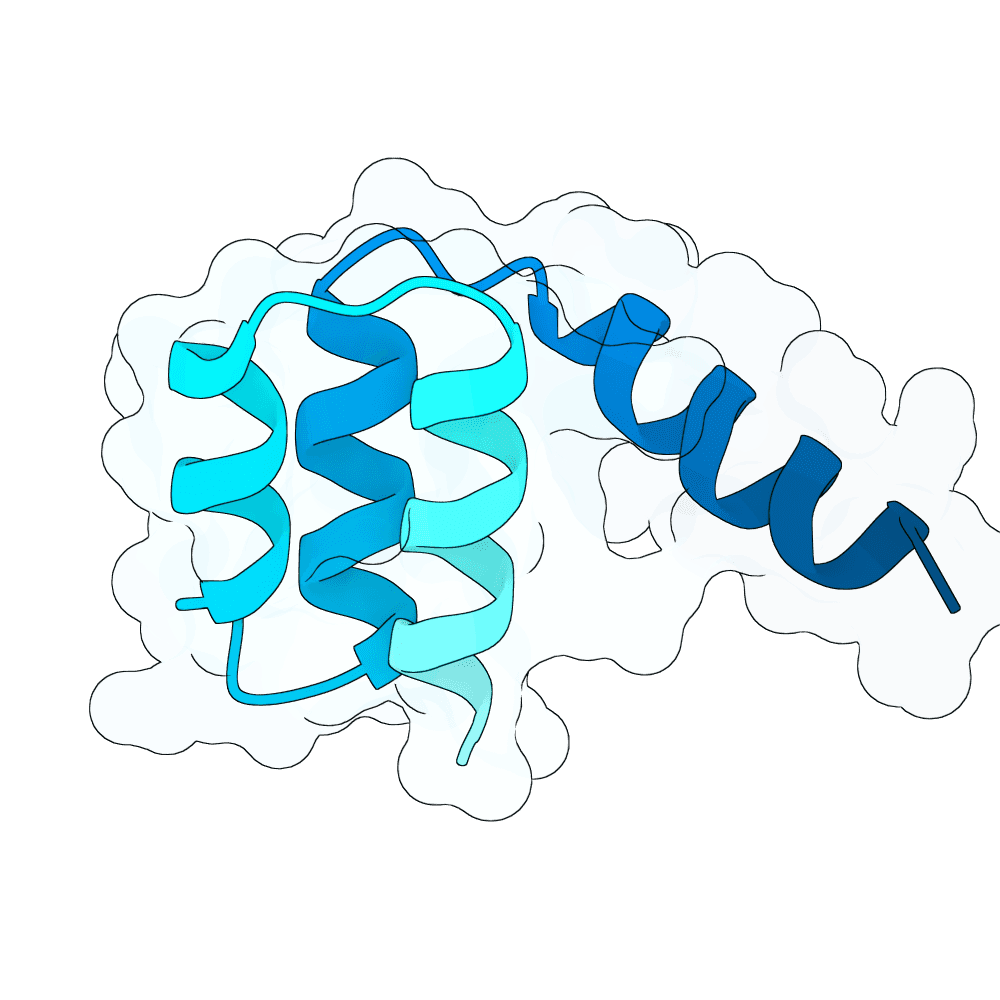
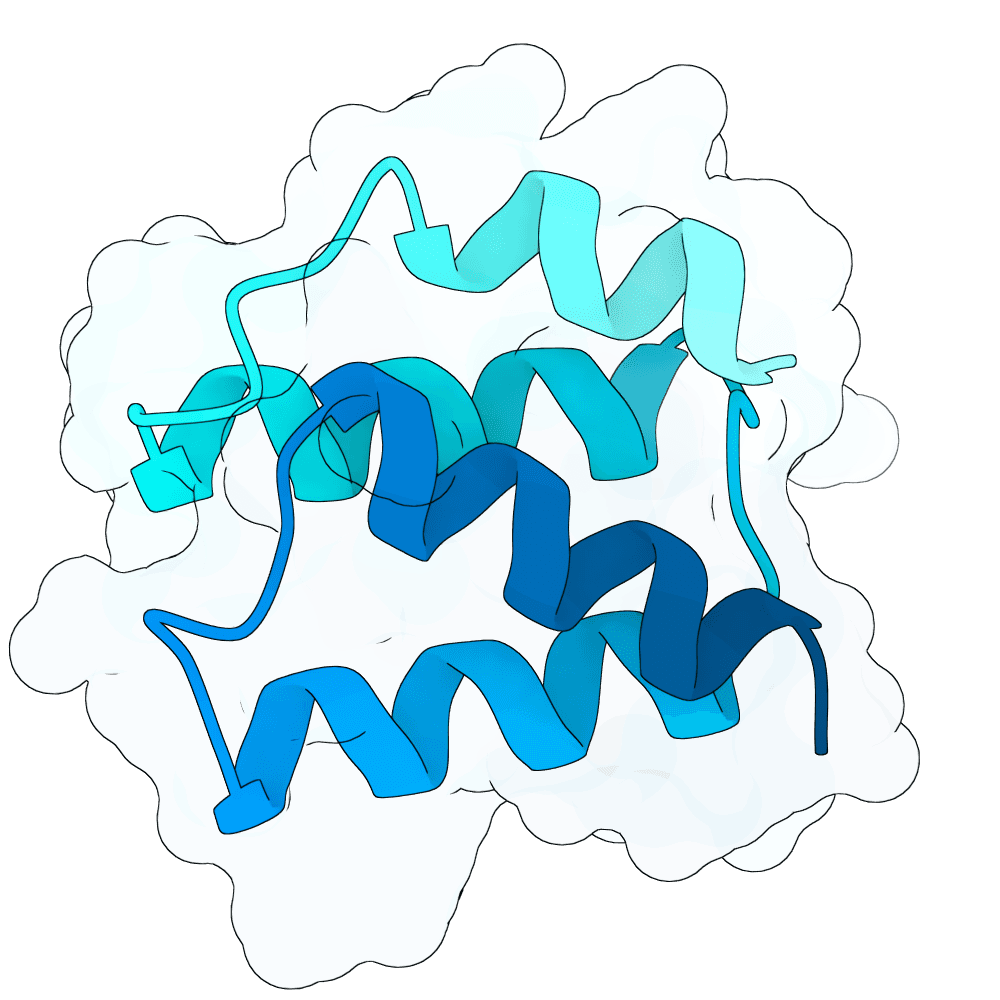
Description
Authors: Alejandro Cadillo-Valverde*, Alvaro Pacheco Concha*, Pohl Milon Affiliation: Biomolecules Laboratory (Milon Lab), Universidad Peruana de Ciencias Aplicadas (UPC), Lima 15081, Peru *Contributed equally
Nipah virus (NiV) infection begins when its attachment glycoprotein (G) binds the host receptor ephrin-B2 (EFNB2). This high-affinity protein-protein interaction drives viral entry into neurons and endothelial cells, contributing to NiV’s severe neuropathogenicity. Unlike most paramyxoviruses that rely on sialic acid or other glycans, NiV engages a proteinaceous receptor. EFNB2’s G–H loop (residues 107–125) inserts into a hydrophobic cavity within NiV-G’s β-propeller. Key EFNB2 residues (Phe120, Leu124, and Trp125) mediate the interaction: Phe120 deeply occupies a hydrophobic pocket, while Leu124 and Trp125 contribute additional hydrophobic stabilization. Structural studies consistently show a highly specific interface with well-defined hotspots on both partners. At the Milon Lab, our binder-design strategy focuses on targeting this critical interface. By annotating structural hotspots on NiV-G and preserving a EFNB2’s binding motif, we aim to engineer miniproteins capable of competitively blocking receptor engagement and preventing viral attachment. References Bonaparte, M. I., Dimitrov, A. S., Bossart, K. N., Crameri, G., Mungall, B. A., Bishop, K. A., Choudhry, V., Dimitrov, D. S., Wang, L.-F., Eaton, B. T., & Broder, C. C. (2005). Ephrin-B2 ligand is a functional receptor for Hendra virus and Nipah virus. Proceedings of the National Academy of Sciences, 102(30), 10652–10657. https://doi.org/10.1073/pnas.0504887102 Bowden, T. A., Aricescu, A. R., Gilbert, R. J. C., Grimes, J. M., Jones, E. Y., & Stuart, D. I. (2008). Structural basis of Nipah and Hendra virus attachment to their cell-surface receptor ephrin-B2. Nature Structural & Molecular Biology, 15(6), 567–572. https://doi.org/10.1038/nsmb.1435 Guillaume, V., Aslan, H., Ainouze, M., Guerbois, M., Fabian Wild, T., Buckland, R., & Langedijk, J. P. M. (2006). Evidence of a Potential Receptor-Binding Site on the Nipah Virus G Protein (NiV-G): Identification of Globular Head Residues with a Role in Fusion Promotion and Their Localization on an NiV-G Structural Model. Journal of Virology, 80(15), 7546–7554. https://doi.org/10.1128/jvi.00190-06 Hauser, N., Gushiken, A. C., Narayanan, S., Kottilil, S., & Chua, J. V. (2021). Evolution of Nipah Virus Infection: Past, Present, and Future Considerations. Tropical Medicine and Infectious Disease, 6(1), 24. https://doi.org/10.3390/tropicalmed6010024 Negrete, O. A., Levroney, E. L., Aguilar, H. C., Bertolotti-Ciarlet, A., Nazarian, R., Tajyar, S., & Lee, B. (2005). EphrinB2 is the entry receptor for Nipah virus, an emergent deadly paramyxovirus. Nature, 436(7049), 401–405. https://doi.org/10.1038/nature03838
Assign Design Method Method Name: EFNB2-Motif-Anchored Miniprotein Design with Boltzgen + Boltz2 ipSAE Evaluation Description: We designed miniprotein binders that mimic the EFNB2 interface used by the Nipah virus G protein (PDB: 2VSM). First, we mapped critical hotspots through structural analyses using PLIP, InterProSurf, and ConSurf, identifying EFNB2 residues 120–125 as the minimal interaction motif and NiV-G hotspots across residues 239–242, 388–389, 490–506, and 559–581. Then we employed Boltzgen to generate a library of 12,600 miniprotein designs with the EFNB2 interaction motif used as a central anchor. After generating the initial library, we selected the top 10% of designs based on predicted TM score for design target contacts (ipTM). These designs were then further re-folded through Boltz2 to calculate the ipSAE score and rank them.
Configuration: Design Pipeline Structural hotspot identification Tools: PLIP, InterProSurf, ConSurf, PyMOL
Defined EFNB2 interaction motif (120–125) Annotated NiV-G contact residues and hydrophobic patches
Motif-anchored binder generation (Boltzgen)
EFNB2 motif (120–125) used as a fixed central scaffold N- and C-terminal flanks randomly generated (10–50 aa per side) Total library: 12,600 miniproteins
Initial screening based on ipTM (Boltzgen)
Retained top 10% of binders predicted to best reproduce target contacts
High-resolution re-folding and scoring (Boltz2)
Refolded selected binders Computed ipSAE scores to rank structural agreement of the binder:G complex and predicted interface quality
Prompts and Parameters Motif constraint: EFNB2 residues 120–125 (PDB: 2VSM) Flank length: 10–50 aa (each side) Software: PLIP, InterProSurf, ConSurf, PyMOL, Boltzgen, Boltz2
Selection criteria: ipTM (top 10% initial filtering) ipSAE (final ranking after re-folding)